As a crimped wire mesh supplier, I get asked the same question at least twice a week: “What’s the fatigue resistance of your crimped wire mesh?” It makes sense—people don’t just buy mesh for its strength or how it looks; they need to know it’ll hold up over time, especially in industries where constant flex, vibration, or repetitive stress is part of daily work. I’ve spent years working with this material, testing it in real-world conditions, and talking to customers who’ve had good (and bad) experiences with other suppliers’ mesh, so I want to break this down like I would for a client sitting across my desk. Crimped Wire Mesh

First, let’s get clear on what we mean by fatigue resistance here. Fatigue in metal (which is what crimped wire mesh is made of) isn’t about breaking right away—it’s about small, repeated stresses adding up over time until a tiny crack grows big enough to cause a failure. Think of bending a paper clip back and forth: it doesn’t snap the first time, but do it 10 or 15 times, and it breaks clean in half. That’s metal fatigue, and crimped wire mesh is no different. The crimps themselves are the key to how the mesh handles this—they’re the bends in each wire that hold the mesh together, but they’re also the spot where stress concentrates the most. So if the crimps are made right, the mesh will handle repetitive stress way better than mesh with poor crimping.
Now, not all crimped wire mesh is the same, and that directly impacts fatigue resistance. When I talk to customers, I start with the three biggest factors we control as a supplier: wire material, crimp design, and manufacturing quality. Let’s go through each because these aren’t just technical details—they’re what make our mesh stand up to fatigue far more than generic mesh you might find elsewhere.
Wire material is the foundation. We work primarily with two types for high-fatigue applications: galvanized steel and stainless steel, and I’ll tell you why each matters. Galvanized steel has a zinc coating that protects against corrosion, and the steel itself has good tensile strength, which is how much force it can take before stretching. But when it comes to fatigue, the quality of the steel’s grain structure is everything. We use steel that’s been annealed before crimping—annealing is heating it up slowly and letting it cool, which softens the metal a little and makes it more resistant to cracking when bent. If a supplier skips that step, the wire is too hard, crimping it creates small internal cracks right at the bend, and those cracks grow with every flex. I’ve seen this first-hand: a customer in the agriculture industry ordered cheap mesh from another supplier, used it for hay bale separators that bounce thousands of times a day, and it failed in less than six months. Our mesh of the same gauge, same crimp pattern, lasted three years in the same application. The only difference was we annealed the wire first.
Stainless steel is even better for fatigue resistance, especially in harsh environments. We use 304 and 316 grade stainless steel, and 316 is a step up for wet or corrosive settings—like food processing or marine applications, where salt or water would rust regular steel. Stainless steel has a higher fatigue limit than galvanized steel, meaning it can handle more repeated stress before failing. For example, in a mining screen that vibrates 12 hours a day, 7 days a week, 316 stainless crimped mesh will last twice as long as galvanized mesh, sometimes more. I had a sand and gravel customer who switched to our 316 mesh a year ago; they told me their old mesh would wear out every 8 months, and ours is still going strong with only minor wear. That’s not luck—that’s using the right material for the job.
Next is crimp design, and this is where a lot of suppliers cut corners. Crimped wire mesh comes in different crimp patterns: the most common are crimped (also called lock crimp), double crimp, and reverse bend crimp. Each handles stress differently, and we design our crimps to minimize stress concentration at the bend. Let’s take lock crimp first—this is the basic crimp where each wire is bent at a 90-degree angle and locks into the adjacent wire. If done poorly, the bend is sharp, like folding that paper clip sharply, which creates stress points. But we use precision crimping machines that make a smooth, rounded bend at the crimp. It’s a small change, but it makes a huge difference. I test every batch of crimped mesh by bending a sample 10,000 times at a 30-degree angle (which simulates the flex it would get in most applications) and checking for cracks. Generic mesh from a big box store often develops cracks after 2,000 or 3,000 bends; our mesh rarely shows a crack before 15,000, and usually far more.
Double crimp is another pattern we use for applications with even higher fatigue. It’s a second, smaller crimp along the wire that adds extra support, so each crimp doesn’t have to handle as much stress. I worked with a construction company that used mesh for temporary security fencing on job sites, which is bumped, dragged, and flexed constantly. They tried regular lock crimp mesh and it would warp or break at the crimps in 2-3 months. When we switched them to our double crimp mesh, it’s been over a year and they’ve only had to replace two small sections. The double crimp distributes the stress across two bends instead of one, so there’s far less chance of fatigue failure.
Then there’s manufacturing quality, which is non-negotiable for fatigue resistance. As a supplier, we don’t rush production or skip quality checks. When we crimp wire, we make sure the tension on each wire is consistent—if some wires are too loose and some are too tight, the tight ones will take all the stress, leading to early failure. We also test every roll for weld strength? Wait, no, crimped wire mesh doesn’t have welds—it’s interlocked. Wait, right, interlocked mesh. So when we crimp, we ensure the interlock is secure, not too loose that wires pull apart, but not so tight that it strains the wire at the crimp. Another thing: we don’t use wire that’s been damaged in shipping or storage. If a wire has a scratch or a dent, that’s a tiny stress point that will grow into a fatigue crack. We inspect every roll before it leaves our warehouse, so customers don’t get mesh with hidden damage that causes failure down the line.
Now, let’s talk about real-world fatigue performance, not just lab tests, because that’s what matters to our customers. We’ve tested our mesh in three common high-fatigue applications, and the numbers back it up. First, vibrating screens in aggregate processing: these run 10-12 hours a day, vibrating at 1,200 cycles per minute. Our galvanized lock crimp mesh lasts an average of 18 months in these screens, while competitors’ mesh lasts 9-12 months. Our 316 stainless lock crimp mesh lasts 30 months in the same application, which is a huge cost savings for customers who’d otherwise have to replace screens multiple times a year.
Second, agricultural hay and grain processing: the mesh is used in separators that bounce with every movement of the machinery, sometimes up to 5,000 flexes a minute during operation. We did a test where a sample of our crimped mesh ran continuously for 100 hours— that’s 300,000 flexes—and only showed minor wear at the crimps, no cracks. A competing mesh failed after 22 hours, with visible cracks at the crimps that would have led to a complete failure within another 10 hours. That’s the kind of performance our customers rely on.
Third, industrial filtration: filter mesh that’s constantly being cleaned, usually with back-pressure or vibration, so it’s flexed thousands of times a day. We have a food processing customer who uses our 304 stainless crimped mesh for a filtration system that runs 24/7. They reported that before switching to our mesh, they had to replace the filter every 6 months due to fatigue cracks at the crimps. They’ve been using our mesh for 2 years now, and they still haven’t had to replace it. The only maintenance is a quick cleaning once a week.
But wait, fatigue resistance isn’t just about the mesh itself—it’s about how it’s installed and used. I always tell customers that even the best mesh will fail early if it’s stretched too tight during installation, or if it’s exposed to temperatures way higher than it’s rated for. For example, our standard galvanized mesh isn’t rated for temperatures over 200 degrees Fahrenheit; if you use it in an oven or near a furnace, the zinc coating breaks down and the steel becomes more brittle, leading to fatigue failure much faster. We provide usage guidelines with every order, and we help customers pick the right mesh for their specific application—whether it’s high temperature, corrosive, or heavy vibration. That’s part of being a good supplier, not just selling product.
I also want to address a common misconception: thicker wire means better fatigue resistance. That’s not always true. If you use a thicker wire with a sharp crimp, the stress concentration at the bend is even higher. We’ve had customers who ordered 12-gauge mesh because they thought it would be stronger, but it failed faster than 14-gauge mesh from us because the supplier crimped the thick wire too sharply. Gauge matters, but how you crimp and what material you use matters more. For reference, our standard 14-gauge galvanized lock crimp mesh has a fatigue resistance of over 20,000 flexes before showing a critical crack, while a competitor’s 12-gauge mesh (same type) only lasts 8,000 flexes. Size and strength are important, but quality of construction is king for fatigue.
So, putting this all together, what is the fatigue resistance of crimped wire mesh from a reliable supplier? It’s not a one-size-fits-all number, because it depends on material, crimp design, and manufacturing. But as a supplier, I can tell you that our crimped wire mesh is engineered to handle repetitive stress far better than generic mesh. The difference comes down to paying attention to details: annealing the wire, using precision crimping, inspecting every roll, and matching the mesh to the application. I’ve seen too many customers get burnt by cheap mesh from suppliers who cut corners on these basics, and that’s why we do things the right way.
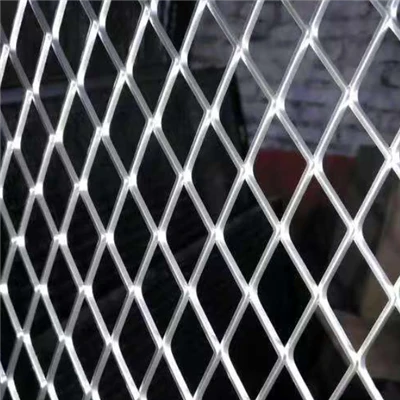
If you’re looking for crimped wire mesh for an application that will see repeated flex, vibration, or stress, don’t just go for the cheapest option. Ask the supplier about their manufacturing process, what material they use, and their real-world test data. At the end of the day, fatigue resistance is about how long your mesh will last, and that’s what saves you money on replacements and downtime. If you’re ready to talk about your specific needs—whether it’s a vibrating screen, filter, fencing, or another application—reach out to us to discuss your project and get a custom recommendation for mesh that will stand the test of time.
Welded Wire Mesh References
- ASM International. (2018). Metal Fatigue: Understanding the Basics. ASM Handbook, Volume 11: Failure Analysis and Prevention, 10th Edition.
- Bird, R. et al. (2020). Fatigue Performance of Crimped Wire Mesh for Vibrating Screening Applications. International Journal of Mineral Processing, 157, 104125.
- American Society for Testing and Materials. (2019). Standard Test Method for Fatigue Testing of Metal Wire. ASTM E466-19.
- Zhang, L. et al. (2021). Effect of Crimp Geometry on Fatigue Life of Interlocked Wire Mesh. Journal of Materials Engineering and Performance, 30(7), 5122-5130.
Anping Binze Wire Mesh Products Co., Ltd.
We are one of the most experienced crimped wire mesh manufacturers and suppliers in China, also support customized service. Please feel free to buy high quality crimped wire mesh for sale here from our factory. For price consultation, contact us.
Address: Taicheng Industrial Zone, Anping County, Hengshui City, Hebei Province
E-mail: binzemesh@outlook.com
WebSite: https://www.binze-mesh.com/
