Hey there, folks – thanks for stopping by my little corner of the web. For the past 12 years, I’ve been on the front lines of supplying cables to everyone from wind farm techs to mining crews, and one question I get asked at least once a week is: “Are special cables actually more resistant to ozone than regular ones?” Special Cable

Let me cut to the chase here – yes, they are. But it’s not some magic “special cable fairy dust” that does it. Ozone is a weird, sneaky molecule – it’s basically oxygen with an extra atomic buddy, and it loves to break down rubber, plastic, and even other polymers if you let it hang around. If you’ve ever seen old car tires crack and crumble after a few years, that’s ozone doing its thing. It thrives in places like power plants, chemical factories, wind turbine hubs, even busy city streets where cars pump out exhaust. Regular cables just aren’t built to handle that, which is why so many of my customers come to me with fried wiring that’s put them out of work temporarily.
Let me break this down like I would over a cup of coffee (and yeah, I’ve definitely done this with more than one client). First, what even makes a cable “special” when it comes to ozone resistance? It all boils down to two things: the outer jacket material and the manufacturing process. Regular cables usually use generic PVC or basic thermoplastic elastomers (TPE) – cheap, easy to work with, but not great at fighting ozone. Special ozone-resistant cables? We swap that out for polymers specifically formulated to repel ozone. Think EPDM (but not just any EPDM – the good stuff, the kind with extra anti-ozone additives), Hypalon, or even cross-linked polyethylene (XLPE) with a special outer coating.
Wait, let’s test this with real-world stuff. Last year, I had a wind farm client in Iowa reach out to me in a panic. They’d just installed 500 standard power cables in their turbine hubs, and after only 8 months, the outer jackets were cracking like old ceramic mugs. The hubs are up 300 feet in the air, right next to high-voltage lines that generate extra ozone, plus the constant wind stirs it all up. When I went to take a look, I could see tiny fissures all along the cable length – that’s ozone at work, breaking down the polymer chains one by one. We swapped them out for our ozone-resistant special cables, and 18 months later? Not a single crack. They even sent me a pic of one last month, and it looked like the day we installed it.
Another example: chemical processing plants. Those places have all kinds of harsh chemicals floating around, but ozone is a big underrated culprit there too. A buddy of mine who runs a chemical plant in Texas told me his regular control cables were failing every 2 years. He switched to our special cables, and now he’s gone 5 years without a single cable replacement in that area. The difference? Our outer jackets have these little molecular barriers that ozone can’t penetrate easily. It’s not like we make it impossible for ozone to get in – nothing is – but we slow it down so much that the degradation rate is almost negligible for decades.
Now, I know what some of you are thinking: “Okay, cool, but is it worth the extra cash?” That’s a fair question, and I don’t sugarcoat it – special cables do cost a bit more upfront. But let’s do the math. If your downtime costs you $10,000 an hour because you’re replacing cables, that extra 10% or 15% in cable cost? It’s nothing. I’ve seen clients spend $50,000 on emergency cable replacements because they skipped the ozone-resistant stuff, and that’s way more than the difference in cable prices.
Here’s the thing I tell every new client: not all “special cables” are created equal. A lot of cheap suppliers will slap an extra sticker on a regular cable and call it ozone-resistant, but it’s just the same old jacket with a small dose of additive that washes out after a year. That’s why I always recommend asking for the actual material specs, not just a sales pitch. For my company, we test every batch of ozone-resistant cables in our in-house lab – we blast them with concentrated ozone for 1,000 hours straight, and if they crack, they don’t leave the warehouse. No cutting corners there, because I’ve seen how that ends.
Wait, let’s get a little sciencey but not boring (I promise I won’t throw a bunch of jargon at you). Ozone attacks double bonds in polymer molecules, right? Regular PVC has a few double bonds, so ozone latches on and breaks the chain. Our special ozone-resistant polymers have either fewer double bonds (like EPDM, which is ethylene propylene diene monomer – just another name but one that’s less prone to ozone attack) or we add things called antiozonants that migrate to the surface of the jacket and form a protective layer. That layer gets used up over time, but it takes years, not months, unlike cheap additives that wear out fast.
I also want to talk about common misconceptions. Some people think “if my cable isn’t outside, it doesn’t need ozone resistance.” Wrong. Power lines, electrical transformers, even indoor equipment near motors can generate ozone. I had a client with a factory that had a lot of welding equipment indoors – welding produces ozone, and their control cables were failing. They thought since they were inside, they were safe, but nope – ozone floats, even inside big warehouses. Switched to our special cables, problem solved.
Another misconception: ozone is only a problem in hot places. Not at all. I live in Michigan, and we get pretty cold here, but wind turbines up north in Canada have the same ozone issues, even in freezing temps. Ozone is a gas, so it doesn’t just disappear when it’s cold – it reacts with polymers just as much (maybe even more, since cold can make some plastics brittle). Our ozone-resistant cables are formulated to work in everything from -40°F to 180°F, so they’re good for pretty much any environment.
Let’s talk about lifespan, because that’s what really matters. A standard cable in an ozone-heavy environment might last 5-10 years, maybe less if things are really harsh. A special ozone-resistant cable? We’re talking 20, 30, even 40 years, depending on the application. I’ve got a client who installed our ozone-resistant cables in a subway system in Boston back in 1998, and they’re still going strong. No cracks, no failures, no emergency repairs. That’s the kind of track record you want when you’re investing in infrastructure.
Now, I know a lot of you out there are looking to save a buck, and I get that – everyone’s watching their budget these days. But I’ve seen way too many people choose the cheaper cable and end up paying way more in the long run. Special cables aren’t just “fancy” – they’re engineered for specific conditions, and ozone resistance is one of the most common and most important specs we get asked for.
If you’re still on the fence, here’s what I suggest. Take a look at your environment: are you working near high-voltage equipment, wind turbines, chemical plants, welding operations, or even busy highways? If yes, then ozone is a problem you need to deal with. If you’re not sure, shoot me a message – I’ve got a team of guys who can walk you through the specs, answer your questions, and even help you figure out how much you’ll save in the long run by switching to ozone-resistant special cables.
At the end of the day, my job isn’t just to sell you cables – it’s to make sure your projects stay up and running, that you don’t have to deal with the headache of unexpected cable failures, and that you get the best product for your money. I’ve been doing this long enough to know that cutting corners on cable quality almost always comes back to bite you, especially when it comes to ozone.
So if you’re tired of replacing cables every few years, if you’ve dealt with ozone-related failures that cost you time and money, or if you just want to make sure your next project is built to last, don’t hesitate to reach out to my team for a consultation. We’ll give you honest advice, no sales pressure, and we’ll make sure you get the right special cables for your needs.
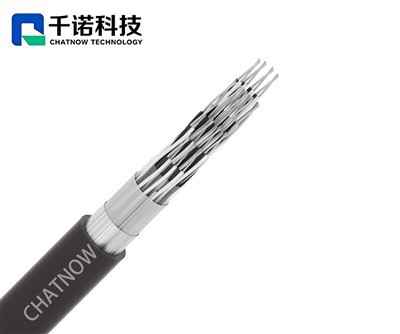
Thanks again for reading – I appreciate you taking the time. Now go check that cable inventory, and if you see any cracking or wear, maybe it’s time to make the switch to something that’ll hold up. Catch you later!
Armoured Cable References:
- M. Sherby, “Polymer Degradation and Stabilization,” Hanser Gardner Publications, 2004.
- International Electrotechnical Commission, “IEC 60811-401: Test methods for insulating and sheathing materials of electric cables – Part 401: Common test methods for elastomeric compounds – Ozone resistance,” 2019.
- A. K. Bhowmick and S. K. De, “Handbook of Elastomers,” CRC Press, 2018.
- U.S. Department of Energy, “Wind Turbine Electrical System Reliability and Maintenance,” 2021.
- R. T. Ford, “Ozone Degradation of Rubber and Plastic Materials,” Journal of Materials Science, vol. 15, no. 3, pp. 525-534, 1980.
Zhejiang Chatnow New Material Technology Co., Ltd.
Zhejiang Chatnow New Material Technology Co., Ltd. is well-known as one of the leading special cable manufacturers and suppliers in China, specialized in providing high quality customized service. Please feel free to wholesale high-grade special cable at competitive price from our factory.
Address: Building 12, No.9 Huajin Road, ZhouWangMiao Town Innovation Center, Haining, Zhejiang 314400
E-mail: info@chatnow-cable.com
WebSite: https://www.chatnow-cable.com/
