If you’ve ever walked through an industrial plant, a data center, or even a construction site, you’ve probably glanced at those big metal boxes mounted on walls or tucked away in utility rooms. Those are electrical control cabinets—aka control panels, switchboards, or just “cabinets” to us folks who work with them—and they’re way more than just metal storage for wires. As a control cabinet supplier who’s been in this game for over a decade, I can’t tell you how many times I’ve gotten calls from customers asking, “Wait, why do I need this specific cabinet for my job instead of the one down the street?” The truth is, not all control cabinets are created equal, and picking the wrong one can lead to headaches—like downtime, safety hazards, or even costly rewiring down the line. Let’s break down the main types, what makes them different, and how to figure out which one you actually need. Electrical Control Cabinet
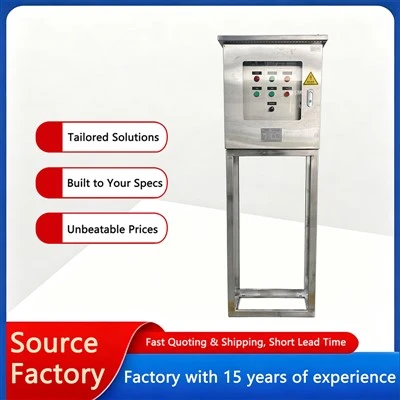
First off, let’s start with the most common one: the standard indoor control cabinet. If you’re working in a factory that’s climate-controlled, an office building’s utility closet, or a warehouse where the temperature never goes above 90°F (or below freezing, for that matter), this is your go-to. These cabinets are pretty straightforward—they’re usually made of mild steel (sometimes stainless steel for extra corrosion resistance, though that’s less common here) with a powder-coat finish to keep rust at bay, and they’re rated IP20 or IP30, meaning they keep out solid objects larger than a finger, but they don’t handle moisture or dust well. I see a lot of customers reach for these because they’re cheap and easy to source, but here’s the catch: if you stick one outside, or in a dusty sawmill, or a bathroom that gets steamy, it’s gonna fail. Last year, we had a customer who put a standard indoor cabinet on his construction site to run a small crane. By the end of the week, dust had clogged the ventilation slots, and morning dew had shorted out the contactors. He had to pay $1,500 in emergency repairs and lost two days of work—all because he didn’t check the rating. That’s why I always ask new customers: where is this cabinet going to live? If it’s inside a controlled space, standard indoor is your guy. It’s versatile, easy to modify, and works for stuff like motor control for assembly lines, building HVAC systems, or small automation panels.
Next up, outdoor control cabinets—and these are a totally different beast. Outdoor cabinets need to handle rain, snow, UV rays, extreme temperatures, dust storms, even salt air if you’re working near the coast. So their ratings are way higher: IP54, IP65, even IP67 if they’re gonna be submerged occasionally. Let’s talk about materials here too. A standard indoor cabinet’s powder coat will peel after a year of being in direct sunlight, so outdoor ones are either made of galvanized steel (which is coated in zinc to fight rust) or 304/316 stainless steel, which is even better for salt or harsh chemicals. They also have features the indoor ones don’t: sealed gaskets on every door and panel, heated bases for cold climates to keep condensation from forming inside, ventilation fans with dust filters, and sometimes even sunshades for areas that get intense direct sunlight. I recently did a project for a solar farm out in Arizona—those cabinets are in the middle of nowhere, 110°F days, freezing nights, and dust that’s like fine sand. We had to spec them with IP65 stainless steel, heated bases, and a closed-loop ventilation system so the solar inverters never overheated. The customer told us last month they haven’t had a single issue, which is way more than the old cabinets they were using. Outdoor cabinets aren’t cheap, but if you skimp on them, you’re gonna pay way more in repairs later.
Then there’s the explosion-proof control cabinet—and this is the heavy hitter. These are for hazardous locations: oil refineries, chemical plants, grain silos, places where there’s a risk of flammable gases, vapors, or dust (that’s what Class I, Class II, and Class III ratings are for, in case you’ve heard that thrown around). Regular control cabinets have air inside them, right? If there’s a spark from a faulty wire, that air can ignite any nearby flammable stuff. Explosion-proof cabinets are made to contain that spark—they’re built with thick, cast aluminum or steel, and every seam, door, and screw is precision-machined to create a flame path. That means if there’s an internal explosion, the flames get slowed down and cooled as they pass through those narrow gaps, so they don’t ignite the surrounding atmosphere. Also, all the electrical components inside are rated for hazardous use—no cheap switches or wires here. I remember a few years back, we had a call from a grain mill that had a small explosion in their old cabinet. Nobody got hurt, but the whole mill shut down for three days while they fixed it. They swapped to explosion-proof cabinets after that, and now they do regular inspections and haven’t had an issue. These cabinets are way more expensive (like 2-3x a standard indoor cabinet) but they’re non-negotiable if you’re working with flammable materials. Don’t even try to cut corners here—OSHA and other safety regulators will shut you down if you use a regular cabinet in a hazardous location.
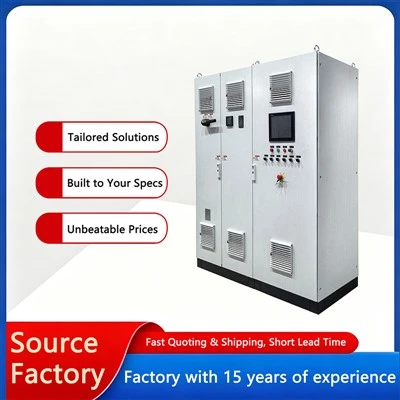
Another type that’s been blowing up lately is the modular control cabinet. If you’ve ever needed to modify a standard cabinet on the fly—add more switches, upgrade a PLC, rearrange wires—you know how much of a pain it is. Modular cabinets are designed for that. They have standardized panels, rails, and slots that let you swap out components without drilling new holes or rewiring the whole thing. Most of them use a type of framing called a “profile rail system,” which is basically like Lego for control cabinets. You can get them as indoor or outdoor rated, and they come in all sizes—from small 12×12 inch panels for a single motor to big 8ft tall cabinets for entire factory lines. The biggest benefit here is flexibility. A lot of our customers in automation or custom manufacturing love these because their needs change all the time. One month they might need a small panel for a new packaging machine, next month they might expand a whole production line and just add new modules to the same cabinet. It saves them time and money in the long run because they don’t have to buy a whole new cabinet every time their project changes. We’ve also started offering pre-wired modular cabinets, which is a huge time-saver for customers who don’t want to do all the wiring themselves. They just plug in the modules and it’s good to go.
Wait, can’t forget about the PLC control cabinet, which is a subset but worth calling out because it’s so common. PLC stands for Programmable Logic Controller, and these cabinets are all about housing that controller—along with its power supplies, input/output modules, and any communication hardware—for industrial automation. What makes these different from standard cabinets is that they need to be tailored to the specific PLC system. For example, if you’re using a Siemens S7-1500 or a Allen-Bradley CompactLogix, the cabinet has to have enough space for the PLC rack, proper cooling (because PLCs generate heat, and too much heat kills their lifespan), and good wiring organization for all the I/O signals. A lot of our customers mix up standard control cabinets with PLC cabinets, but standard ones might not have the precision wiring or cooling that PLCs need. Last year, a customer called us because his PLC was crashing every afternoon—turns out his standard cabinet didn’t have enough ventilation, so the overheating PLC was resetting. We swapped it out for a PLC-specific cabinet with a variable-speed fan and temperature sensor, and the problem was gone.
Oh, and there’s also the low-voltage and high-voltage control cabinets—though that’s more about their electrical rating than their physical design, it’s still a key difference. Low-voltage cabinets are for 600V or less, which is what most industrial equipment, buildings, and small motors use. High-voltage is anything above that, up to 15kV or even higher for things like power distribution for large facilities. High-voltage cabinets are way heavier, thicker, and have way more safety features—like insulated doors, interlocks that shut off power if you open the door, and arc-flash protection (which is super important because a high-voltage arc can cause serious burns or even death). If you’re working with high-voltage, you can’t use a low-voltage cabinet—they’re not insulated enough, and they don’t have the safety protocols. We had a customer in the utility sector try to use a standard low-voltage cabinet for a 10kV line, and when he turned it on, the cabinet arced. It melted the door and he had to replace the whole thing plus get his technicians trained on high-voltage safety. That was a $20k mistake he’ll never make again.
So let’s circle back to the big question: how do you pick the right cabinet for your project? It’s not just about size. First, figure out the environment: is it indoor, outdoor, or hazardous? That’ll tell you the IP rating, material, and any special features you need. Second, what’s it powering: a single motor, an entire assembly line, a PLC system? That’ll tell you if you need standard, PLC, or modular. Third, what’s the voltage? That’ll split low vs high voltage, and you can’t mix those up. Finally, think about future needs: if you think you might expand or modify the system in the next few years, modular is worth the extra cost upfront.
As a cabinet supplier, I’ve seen too many customers make the mistake of buying the cheapest cabinet they can find, and end up paying way more in repairs, downtime, or safety fines. That’s why we don’t just sell cabinets—we help you figure out exactly what you need, no upselling, no confusing jargon. We’ve supplied cabinets to everything from small mom-and-pop machine shops to Fortune 500 factories, and every project gets the same attention to detail.
Power Distribution Cabinet If you’re planning a project and aren’t sure which control cabinet is right for you—whether you need a standard indoor one, an outdoor-rated unit, explosion-proof for a hazardous site, modular for a flexible setup, or something else—reach out. We’ll walk through your needs, answer all your questions, and make sure you get a cabinet that works for your budget and your project. No pressure, no sales pitch—just real advice from someone who’s been in this field long enough to know what works (and what doesn’t).
References
- National Electrical Manufacturers Association (NEMA) Standards for Enclosures, 2022
- International Electrotechnical Commission (IEC) 60529: Degrees of Protection Provided by Enclosures (IP Code), 2019
- Occupational Safety and Health Administration (OSHA) 29 CFR 1910 Subpart S: Electrical, 2023
- Underwriters Laboratories (UL) 508A: Industrial Control Panels, 2021
Hangzhou Dagang Electric Co., Ltd.
As one of the most experienced electrical control cabinet manufacturers in China, our products have good reputation in the market. We warmly welcome you to wholesale high quality electrical control cabinet for sale here from our factory. If you have any enquiry about cooperation, please feel free to email us.
Address: 1st Floor, Building 11, No.10 Lingang Road, Renhe Subdistrict, Yuhang District, Hangzhou City
E-mail: fang@dagangelectric.com
WebSite: https://www.hzdg-electric.com/
