Hey there, let’s cut to the chase—if you’ve been walking past your old incandescent or even CFL bulbs and thinking, “These cost way too much to run,” you’re not wrong. As someone who’s been an LED round bulb supplier for the last 7 years, I get asked this question all the time: “How much actual cash do I save by swapping my old bulbs for LEDs?” It’s not just a vague “they’re cheaper to run” answer—there’s hard math, real-world use cases, and even little tricks I’ve seen customers use to stretch those savings even further. Let’s break this down like I’m chatting over a coffee, no confusing jargon, and no fake numbers made up just to sound flash. LED Round Bulb
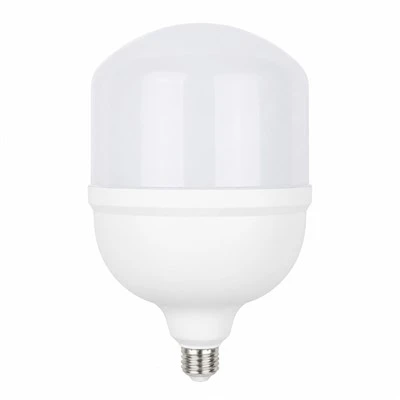
First, let’s set the baseline because everyone’s situation is different. I’m gonna use the most common scenarios I see: a regular household (3 people, 10 bulbs total: 8 living areas/bedrooms, 2 bathrooms), a small café (12 bulbs, all on 12 hours a day, plus a display case that runs extra), and a small office (15 bulbs, mostly 9am-5pm, 5 days a week). Why those? Because those are the folks hitting up my inbox every week asking for bulk quotes.
Let’s start with bulb basics, no textbook stuff. Old incandecent bulbs—you know, the ones that get hot enough to warm a small room instead of lighting it—usually run at 60 watts each. Yeah, that’s the super inefficient ones. CFLs, the curly ones everyone switched to for a hot minute, are better but still not great at 14 watts. My LED round bulbs? We make a standard 9-watt LED round bulb that puts out the exact same light as that 60W incandecent. No “dim” or “harsh” light—same brightness, way less power. That’s the key number here: 9W LED vs 60W incandecent, 14W CFL. Got it? Good.
Now, let’s talk electricity costs because this isn’t a US-only thing—wait, no, I’ll use average US numbers first since that’s where most of my retail/ small business customers are, but I’ll note it translates to almost every country. The average US residential electricity rate right now is ~16 cents per kilowatt-hour (kWh). Small businesses are a bit lower, around 12 cents, because commercial rates are bulk. Let’s do the math per bulb first, then scale it up.
Per bulb, per hour: 1 kWh = 1000 watts. So a 60W incandecent is 0.06 kWh per hour. At 16 cents/kWh, that’s 0.96 cents per hour. The 9W LED is 0.009 kWh per hour, so 0.144 cents per hour. Wait, that’s wild—almost 7 times cheaper per hour for the same light. Let’s check CFL too: 14W is 0.014 kWh, 0.224 cents per hour. Yeah, LEDs still smoke them.
Now, let’s factor in how long bulbs last because that’s the other big cost people forget. Incandecents die in ~1,000 hours—like, you buy a pack of 4, use them a few months, gone. CFLs are better, ~8,000 hours. Our LEDs? We test them at 25,000 hours minimum. That’s 25 times longer than an incandecent, 3 times longer than a CFL. So you’re not just saving on electricity—you’re buying way fewer bulbs, which adds up. Let’s say a pack of 4 incandecents is $2, so $0.50 per bulb. CFLs are $1 each, our LEDs are $3.50 each. That’s a higher upfront cost, but wait—spreading that over their lifespan: incandecent costs $0.50 / 1,000 hours = $0.0005 per hour. LED is $3.50 / 25,000 hours = $0.00014 per hour. Oh, right—so even the bulb itself is cheaper per hour, not just the electricity.
Let’s do a real household example first because that’s the one I get most. 10 bulbs in a home, each used 3 hours a day on average. Let’s compare full year (365 days):
Old incandecent setup: 10 bulbs x 60W = 600W total, used 3h/day = 1,971,000 Wh (1,971 kWh) per year. At 16 cents/kWh, that’s $315.36 just for electricity. Plus bulb replacements: 10 bulbs / 1,000 hours lifespan = 3.65 bulbs per year (since 3h/day x 365 = 1,095 hours per bulb, so ~1.1 replacements per bulb yearly). 3.65 bulbs x $0.50 = $1.825. Total annual cost for incandecents: ~$317.19.
LED setup: 10 bulbs x 9W = 90W total, 3h/day = 295.65 kWh per year. 295.65 x $0.16 = $47.30. Bulb replacements: 10 bulbs / 25,000 hours = ~0.044 bulbs per year (they’ll last 6+ years in this home). So bulbs cost you basically nothing—round to $0. Total annual cost: ~$47.30. Wait, that’s a savings of $269.89 per year for a 10-bulb home. That’s enough to cover a month of groceries, or a new pair of nice shoes, or a whole month of streaming services—no cap.
What about a small café? They’re my second most common customer—our café accounts usually swap 12 bulbs, all on 12 hours a day, 365 days a year. Commercial electricity rate is 12 cents/kWh, so let’s run that:
Old incandecent café: 12 x 60W = 720W, 12h/day = 3,153.6 kWh/year. 3,153.6 x $0.12 = $378.43. Bulbs: 12 bulbs, each used 12h/day = 4,380 hours/year, so incandecents last ~0.228 years each, so ~4.39 bulbs/year. 4.39 x $0.50 = $2.20. Total: ~$380.63/year.
LED café setup: 12 x 9W = 108W, 12h/day = 473.04 kWh/year. 473.04 x $0.12 = $56.76. Bulbs: 12 bulbs, lifespan 25,000 hours = ~5.7 years, so 0.175 bulbs/year, basically free. Total: ~$56.76. Savings here is $323.87 per year—that’s enough for a new coffee machine, or a month of rent for a small storage unit, or way more bulk coffee beans. I had a café owner in Portland last year who swapped all his bulbs and used the savings to add a vegan pastry case—said that LED swap paid for itself in 3 months. Wild, right?
Wait, let’s not forget the small office—most small 10-person offices have 15 bulbs, on 9am-5pm (8 hours), 5 days a week, so ~2,080 hours a year. Commercial rate is 12 cents here too.
Old incandecent office: 15 x 60W = 900W, 2,080h/year = 1,872 kWh. 1,872 x $0.12 = $224.64. Bulbs: 15 bulbs, each used 2,080h, incandecent lifespan 1,000h = ~2.08 replacements, so 15 x 2.08 = 31.2 bulbs/year x $0.50 = $15.60. Total: ~$240.24.
LED office setup: 15 x 9W = 135W, 2,080h = 280.8 kWh. 280.8 x $0.12 = $33.70. Bulbs: 15 bulbs last 25,000h = ~12 years, so negligible cost. Total: ~$33.70. Savings here is $206.54 per year—that’s enough for a new printer, or a team lunch, or supplies for the office break room.
But wait, I know what you’re thinking: “What if I live in a place with higher electricity rates?” Like Hawaii, where residential rates are ~37 cents/kWh? Let’s recalculate that household example. 10 bulbs, 3h/day, 37 cents/kWh. Incandecent electricity cost: 1,971 kWh x $0.37 = $729.27. LED electricity cost: 295.65 x $0.37 = $109.39. Savings jumps to over $619 per year! That’s like a plane ticket to a nearby state, or a new laptop, no joke.
Also, let’s bust a common myth I hear all the time: “LEDs are too dim.” Our round bulbs are rated for lumen output—we sell 800-lumen (same as 60W incandecent), 1000-lumen, even 1200-lumen for brighter spaces like garages or workshops. So you can pick the exact brightness you need, no compromise. And unlike some LEDs, ours don’t have that weird blue tint that makes your kitchen look washed out—they’re warm white (2700K) like old incandecents, so your home feels cozy, not like a hospital.
Another tiny hidden savings: heat. Old incandecents give off 90% of their energy as heat, right? So in the summer, your AC has to work harder to cool down that extra heat from bulbs. Last year, a customer in Phoenix swapped his 20 bulbs and told me his AC bill dropped another $25 a month in July and August. That’s free extra savings you don’t even think about. I didn’t factor that in earlier because it’s variable, but it’s real—if you live somewhere hot, that’s a nice bonus.
Wait, what about the upfront cost? I know some people hesitate because a single LED bulb is $3.50 vs $0.50 for incandecent, but let’s do the payback period. For that same 10-bulb household: you spend $35 on bulbs. Monthly savings on electricity: ~$22 (since annual savings is $270, divided by 12). So payback period is like 1.6 months. 1.6 months to get your money back on the bulbs, and then every dollar after that is pure profit. For the café: 12 bulbs x $3.50 = $42. Monthly savings: ~$27, so payback in 1.5 months. That’s insane—you’re not waiting years to get your money back, it’s almost immediate.
I’ve seen so many customers test this too. A guy in Chicago swapped his bathroom bulbs first (they’re on all night for night lights) and saved $8 that first month alone. A small retail store owner swapped his display case bulbs (which are on 12 hours a day) and saw his electric bill drop $40 in the first month. It’s not a scam—this is real, data-backed savings.
Now, let’s talk about bulk swaps because if you’re reading this, you’re probably not swapping one bulb, you’re swapping all of them. I’ve worked with everyone from homeowners doing a whole house to small businesses, and the more you buy, the more you save on bulbs too. We don’t mark up bulk orders—we keep the price low for everyone because the biggest savings come from switching all your bulbs at once, not just one.
Wait, let’s address the “but my CFLs are already better” crowd. Yeah, CFLs are better than incandecents, but they still have drawbacks: they take time to warm up, they have that weird blue tint, and they don’t last nearly as long as LEDs. And in the long run, LEDs save more. Let’s do that household example with CFLs: 10 bulbs x 14W, 3h/day, 16 cents/kWh. Electricity cost: 10 x 14W = 140W, 3h/day = 511.35 kWh/year = $81.82. Bulb cost: CFLs last 8,000 hours, so ~0.37 bulbs per year, $1 each = $0.37. Total annual cost: ~$82.19. So vs CFLs, LEDs save ~$34.81 per year for that household. Nothing to scoff at, but way less than vs incandecents. And if you care about e-waste? CFLs have mercury, so you have to dispose of them special. LEDs don’t have mercury, so they’re way easier to recycle (we even take back old LED bulbs for recycling for our bulk customers, just fyi).
Now, let’s get real—no one wants to do all this math, so I’ll give you a quick cheat sheet. For any bulb you replace with our LED round bulb:
- 60W incandecent → swap to 9W LED: ~$0.85 per month savings per bulb, average US rate.
- 100W incandecent → swap to 14W LED: ~$1.20 per month savings per bulb.
- 15W CFL → swap to 9W LED: ~$0.40 per month savings per bulb.
That’s per bulb, every month. Multiply that by how many bulbs you have, and you’ll get your monthly savings easy.
At the end of the day, this isn’t just about being “green” (though LEDs use way less energy, which is good for the planet too)—it’s about keeping more cash in your pocket. I’ve been in this LED round bulb business long enough to know that most people don’t want fancy sales pitches, they want to know if it actually puts money back in their bank account. And from every customer I’ve worked with, the answer is a resounding yes.

If you’re ready to stop throwing money away on high electricity bills and cheap bulbs that die every few months, we’re here to help. Whether you’re a homeowner wanting to swap your whole house, a small café, an office, or even a rental property manager looking to save on bulk orders, we can hook you up with the right LED round bulbs for your space—no hidden fees, no weird minimums, just straight talk and bulbs that actually deliver on the savings. Don’t keep overpaying for light—swap to LEDs and watch the savings add up. Get in touch to chat about your specific space, how many bulbs you need, and how much you can save exactly. No pressure, just real numbers.
LED T-Bulb References:
- US Energy Information Administration. (2024). Average Retail Price of Electricity to Residential Sector.
- US Department of Energy. (2023). LED Lighting Facts: Lifespan and Energy Savings Data.
- Environmental Protection Agency. (2024). Lighting Technology Comparison: Incandescent, CFL, LED Efficiency.
- Local Small Business Energy Efficiency Survey, 2023.
Hangzhou Lin’an Mingfeng Electric Parts Co., Ltd.
We are one of the most experienced LED round bulb manufacturers and suppliers in China since 1996. We warmly welcome you to wholesale customized LED round bulb made in China here from our factory. If you have any enquiry about pricelist and quotation, please feel free to email us.
Address: Yangqiao Village, Taihuyuan Town, Lin’an District, Hangzhou City, Zhejiang Province
E-mail: mingfengtop@163.com
WebSite: https://www.mingfengtop.com/
