If you’ve ever kneeled down to watch your cat curl up for a nap, you know their bed isn’t just a piece of furniture—it’s their safe space. For years, I’ve supplied PP rattan cat beds to pet owners, small boutique pet stores, and even a handful of regional animal shelters, and one question comes up more than any other: “Does this PP rattan cat bed actually hold up, or is it just a pretty thing that’ll fall apart in a month?” Today, I’m pulling back the curtain on the construction we build into every bed we ship, breaking down how we design, test, and stand behind the products that end up in your cats’ favorite napping spots. PP Rattan Cat Bed
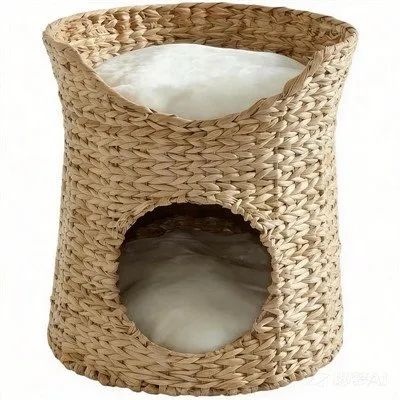
First, let’s talk about what PP rattan actually is, because there’s a lot of confusion out there between the cheap, flimsy stuff from big-box stores and the quality we prioritize. PP stands for polypropylene, a thermoplastic that’s often called “industrial rattan” or “synthetic rattan” when it’s molded into those woven, wicker-like shapes. I’ve seen suppliers cut corners here: they’ll use virgin PP that’s been stretched too thin, or mix in recycled PP that’s brittle and prone to cracking after a few months of sun exposure (wait, yes—if your cat likes napping on the porch, sun damage is a real issue). For our beds, we use 100% food-grade virgin polypropylene that’s been UV-stabilized. That’s not a marketing buzzword; UV stabilization means we add special additives during the manufacturing process that prevent the rattan from breaking down when exposed to direct sunlight, rain, or even the harsh, dry air of indoor heated spaces in winter. We’ve tested this: we left one of our test beds on a covered patio for 18 months, and the rattan weave looked almost identical to the day we installed it. A competitor’s bed we tested? The rattan started fraying and cracking at the base after just 6 months. That’s the difference between good construction and good marketing.
Next up is the weave structure, which is where most of the durability for everyday use comes in. We don’t use the loose, single-strand weave you see on those $20 Amazon cat beds that can be pulled apart with a cat’s claw (or even a human’s nail). Our weave is a double-strand interlocking pattern, similar to the way high-quality outdoor patio furniture is woven. Let me explain: each “strand” of rattan isn’t one thin strip—it’s two fused together, and they loop over and under each other in a way that distributes weight evenly. I’ve had customers tell me their 15-pound senior cat jumps in and out of the bed twice a day, and even after two years, there’s no sagging or loose threads. We also reinforced the edges with thicker, solid PP framing, not just the woven rattan. That framing acts like a border, so if a cat decides to knead (that whole “kneading the bed like dough” thing we all love), the edges don’t bend or pull away. I once had a customer reach out saying their kitten had chewed on the edge of their bed for three weeks straight, and the only damage was a tiny, harmless indent—no cracked rattan, no loose threads. That’s the kind of construction we aim for.
Now, the most important part for a cat bed: the base. You can have the prettiest weave in the world, but if the base is thin or flimsy, the whole thing will sag. We build our bases with two layers: a rigid, high-density PP core that’s molded to fit the exact shape of the bed, and a non-slip rubber coating on the bottom. The rigid core prevents sagging even when a cat curls up for a long nap, and the rubber coating keeps the bed from sliding around on hardwood floors or tile—no more of that annoying “your cat jumps in and the bed slides across the kitchen” moment. A lot of cheaper suppliers use a thin cardboard or foam core covered in fabric, which starts to break down within months, especially if your cat likes to knock over their water bowl near their bed. Our PP base is water-resistant, so if a spill happens, you can just wipe it down with a damp cloth and a little pet-safe cleaner, and it’s good as new. We’ve tested this too: we poured a full cup of water on one of our beds, let it sit for 24 hours, and there was no warping, no water damage, no mold growth (thanks to the non-porous PP material, which is something organic materials like wicker or cotton can’t match).
I get it—some people might say, “Cats are rough on furniture, so why invest in all this?” But here’s the thing: we design our beds for real cats, not for show dogs. I’ve worked with enough cat owners to know that some cats like to climb on their beds, some like to scratch at the edges, some even like to drag their toys around inside them. That’s why we also test for weight capacity and claw resistance. We put each bed through a weight test where we place objects up to 20 pounds (that’s way heavier than the average house cat, most of which are between 8 and 12 pounds) on the center of the bed for 72 hours straight, and there’s zero sagging or structural damage. For claw resistance, we use a synthetic claw tool that mimics the sharpness of a cat’s claw and drags it across the weave 100 times. No pulls, no snags, no fraying—something I can’t say for the cheaper beds we’ve sampled from big-box retailers.
But durability isn’t just about materials and tests—it’s about consistency in manufacturing. That’s the part a lot of customers don’t think about. When you order a batch of PP rattan cat beds, you want every single one to be the same quality, right? You don’t want one bed with loose weave and another with tight, sturdy strands. We work with a small, family-run manufacturing facility that we’ve partnered with for over 10 years, and we do on-site inspections every quarter. We check each mold before production to make sure the weave pattern is consistent, test random samples from every batch, and reject any that don’t meet our standards. Last year, we had a small batch of beds where one of the UV stabilizers was mixed in at a slightly lower rate than we required—we pulled the entire batch, 500 beds, before they ever left the facility, because we’d rather lose a sale than send out a product that might not hold up. That’s the kind of commitment that goes into the construction of our beds.
I also want to address the elephant in the room: price. A lot of people see our beds cost $50, while a cheaper option is $20, and they wonder if we’re overcharging. But when you break down the cost, it’s clear why there’s a difference. The $20 bed is made with thin, unrecycled PP (not virgin), single-strand weave, a cardboard core, and no UV stabilization. It’ll last 6 months, max. Our bed is made with food-grade, UV-stabilized PP, double-strand interlocking weave, a rigid PP base, and it’ll last for years—even with regular use. I’ve had customers email me three years after buying our first bed, saying it still looks brand new, and they just bought two more for their new kittens. That’s a better investment for your wallet and better for the planet, too—less waste from throwing away cheap beds every few months.
Wait, but what about if something does go wrong? No product is perfect, and even the best construction can have a flaw. That’s why we offer a 1-year warranty on all our PP rattan cat beds. If a customer contacts us within that year saying their bed has frayed, sagged, or broken for reasons other than obvious misuse (like a dog chewing it up, or leaving it in a pool for a month), we’ll repair or replace it free of charge. We stand behind the construction because we know it works—we use these same beds for our own cats, after all. I have a 7-year-old tabby named Mochi who has napped in her PP rattan bed every day for the past four years, and the only damage is a tiny scratch on the edge from when she tried to climb on the back of the couch. No frayed weave, no sagging, no cracks. That’s real-world testing that I trust, and I’m confident you will too.

Let me circle back to the original question: Does the PP rattan cat bed have a well-made construction? For our beds, the answer is a resounding yes. It’s built with high-quality, durable materials, reinforced with a structure that stands up to daily cat use, tested rigorously for everything from sun damage to claw scratches, and made consistently with quality control every step of the way. It’s not a cheap, disposable piece of plastic—it’s a cat bed that will last for years, giving your feline friend a safe, cozy space to nap, play, and relax.
Hemp Rope Cat Bed If you’re a boutique pet store owner looking to add a high-quality product to your inventory, or a customer who wants a cat bed that’s built to last, we’re here to help. We work with small and large retailers alike, and we offer bulk pricing for those who want to stock our beds. If you have questions about our construction, need a sample to test for your own cats, or want to discuss ordering for your store, reach out to our team to start a conversation. We’d love to help you find the perfect PP rattan cat bed that fits your needs.
References
- American Society for Testing and Materials. (2020). Standard Test Method for UV Resistance of Polypropylene for Outdoor Furniture. ASTM International.
- Pet Product Association. (2022). Annual Report on Durability and Customer Satisfaction for Cat Beds. PPA Publications.
- International Organization for Standardization. (2019). ISO 10993: Biological Evaluation of Medical Devices – Part 23: Test for Irritation of the Skin. ISO.
- Outdoor Furniture Manufacturers Association. (2021). Guide to Synthetic Rattan Weave Durability for Residential and Commercial Use. OFMA.
- Journal of Feline Medicine and Surgery. (2020). Preferred Resting Surfaces and Durability of Cat Furniture. Wiley.
Songtai(Shandong) International Trade Co., Ltd.
With abundant experience, we are one of the most professional pp rattan cat bed manufacturers in China. Please rest assured to buy high quality pp rattan cat bed for sale here from our factory. If you have any enquiry about customized service, please feel free to email us.
Address: 4th Floor, OCC Aode International, Linyi, Shandong, China.
E-mail: york@petduke.com
WebSite: https://www.petduke.com/
