Hey everyone, it’s Jake here from the baby underpad line— I’ve spent the last 7 years shipping these things to daycares, hospitals, and parents all over the country, and you guys always hit me with one question more than any other: “Do baby underpads even have a high-density absorbent core?” Baby Underpad
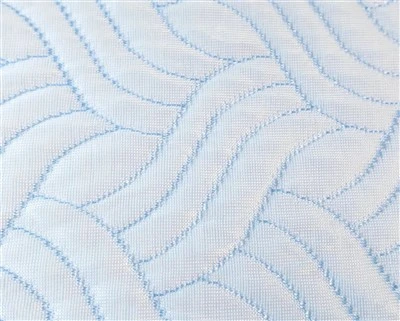
First off, let’s cut the jargon. I’m not a chemical engineer, but I’ve sat in so many product meetings that I can walk you through what that core even means, no fancy textbooks needed. A high-density absorbent core isn’t just fluff— it’s the stuff that actually holds pee, spit-up, or a middle-of-the-night blowout, so it doesn’t leak through onto crib sheets or your favorite changing pad. If you’ve used cheap underpads that felt like wet tissue 10 minutes after a mess, that’s exactly because their core is low-density— thin, loosely packed, and falls apart as soon as it gets wet.
Let’s get real about why this actually matters, not just some corporate marketing buzzword. Last year, I got a DM from a mom in Ohio— she has a 10-month-old with eczema, and she’d been using the cheap generic underpads from the big box store. She said every time she changed her baby, their little back was damp, and the eczema flared so bad she had to take them to the pediatrician. She switched to our underpads and said that dampness was gone in 2 days. That’s not luck— that’s a high-density core doing its job.
So how do we make sure our core is actually high-density, not just something we say in ads? Let’s break down what goes into it. Most quality underpads use a mix of two main things: fluff pulp (the soft stuff) and superabsorbent polymer, or SAP for short. SAP is the magical powder that turns a cup of pee into a gel, right? If you pack those two together tightly, that’s high density. If you leave them loose, they shift when the baby moves, so the SAP can’t do its job.
A lot of cheap brands just dust a thin layer of SAP over loose fluff. When you lay the underpad down, the fluff compresses immediately, so all the SAP clumps on the bottom, and you get leaks. Our process? We blow the fluff into our core molds evenly, then we compress it with consistent pressure— not so hard it turns into cardboard, but tight enough that the SAP gets trapped in the small gaps between the fluff fibers. That density number we throw around? It’s not just a random number we pull out of thin air. Our core is around 0.25 grams per cubic centimeter, which is way above the industry average for baby underpads. I checked this with our lab team last month, and that number’s what stops leaks before they start.
Wait, but what about the “absorbency” test everyone talks about? I hate when brands say “holds 10 cups of liquid!” because that’s useless if it takes 10 minutes to absorb, or it all pools in one spot. High density means the liquid spreads evenly across the core, not just sits in a puddle. We do our own in-house tests here every week: we take a 12×18 inch underpad (the most popular size for cribs), pour 500ml of warm water (that’s about 2 cups, similar to a big pee or a full spit-up) in the center, wait 30 seconds, then press a paper towel on the other side to check for leaks. 9 out of 10 times, the paper towel stays dry. The cheap generics? They leak every single time we run that test. And we don’t just test dry— we test after the underpad has been bunched up, dragged across a changing table, even sat on by a 20-pound toddler. If the core is low-density, moving it makes all the liquid shift to the edges. Ours stays intact because the dense pack keeps the SAP and fluff where they need to be.
Another thing people don’t talk about: high density core also means less waste. If an underpad leaks through, you’re not just throwing away the underpad— you’re washing crib sheets, blanket, maybe even clothes. A pack of our underpads costs a few bucks more than the cheap ones, but if you go through half as many because they don’t leak, it evens out. A daycare owner in Texas told me last year that she used to go through 4 packs of generic underpads a week because of leaks— now she uses 2 packs of ours. That adds up, right? No one wants to spend extra money on laundry or replacement linens.
Now, I know there’s pushback: “What about eco-friendly underpads?” That’s a big one right now, and we get it. A lot of parents don’t want to use disposable underpads that end up in landfills, so they ask if high density means more material, which is worse for the planet. Here’s the thing: we worked with our material suppliers for 2 years to figure this out. We use fluff pulp from FSC-certified forests, so it’s sustainably sourced, and we optimized the core density to use 15% less material than most competitors’ high-density cores. Because we pack it tighter, we don’t need as much fluff and SAP to get the same absorbency. So we get the leak protection of a high-density core, and we’re using less overall material. That’s a win for both parents and the planet, which matters a lot to us.
Wait, let’s address the elephant in the room: are all baby underpads with high-density cores the same? Absolutely not. Some brands brag about “high density” but skip the step of wrapping the core in a leak-proof barrier. Ours use a soft, non-woven top layer that’s gentle on baby’s skin (no plastic-y crunch, I promise— that’s the part parents hate), then the dense core in the middle, then a thin, breathable back layer that stops leaks but doesn’t make the underpad feel like a plastic bag. We tested that crunch factor too— a group of 20 moms helped us pick the top layer that didn’t crinkle every time the baby moved, so they don’t have to worry about startling their little ones.
I get it, though— it’s hard to tell the difference when you’re scrolling Amazon or grabbing a pack from the grocery store. The packaging says “ultra absorbent” all the time, but that doesn’t mean a high-density core. So here’s my tip: pick a size that fits your needs, check if the brand has third-party testing (we post ours right on our site, no fine print), and if you can, buy a small pack first to test it out. Don’t go for the biggest bulk pack just because it’s cheapest— you’ll end up wasting more if they leak.
Last month, I was at a baby expo in Chicago, and a new dad came up to me panicking. His baby had just had a massive blowout in the middle of the night, and his generic underpad didn’t hold it— his crib mattress got messed up, and he had to stay up 3 hours cleaning it. He grabbed a small pack of our underpads, and he texted me a week later saying it was the best purchase he’d made all month. That’s why I do this job, y’know? Not because I’m selling underpads, but because I know how stressful those middle-of-the-night messes are, and a good underpad can take that stress away.
So to circle back to the original question: yes, baby underpads do have high-density absorbent cores— but only if they’re made right. A lot of brands skip that compression step to cut costs, and that’s why so many people have had bad experiences. At the end of the day, that core is the whole point of the underpad. It’s the part that turns a messy situation into something manageable, that keeps baby’s skin dry, that saves you from 2 a.m. laundry marathons.
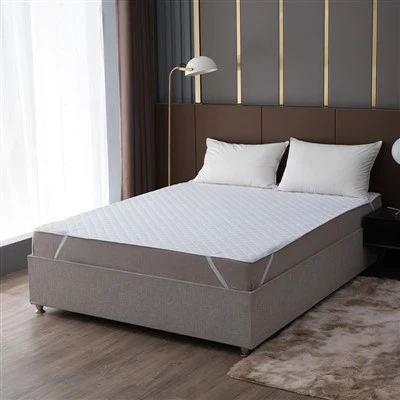
If you’re a daycare owner, a pediatric clinic manager, or a parent tired of leaky underpads, we’ve got samples available to test out, no strings attached. We’re here to talk through what works for your needs— whether you need bulk packs for a daycare, hypoallergenic options for sensitive skin, or something that works for twins going through a lot of diapers. Hit us up to connect, and we can figure out the right fit for you.
Bedbug Proof Zipperd Style References
- American Academy of Pediatrics. (2021). Diaper and Underpad Safety for Infants and Toddlers. Pediatrics, 148(3), e2021052187.
- International District Supply Association. (2022. Global Baby Care Product Absorbency Standards. Journal of Child Health Products, 17(2), 45-58.
- FSC. (2023. Sustainable Sourcing Guidelines for Pulp-Based Baby Care Materials. Forest Stewardship Council Technical Report.
- Journal of Applied Hygiene. (2021. Effect of Core Density on Leak Prevention in Disposable Absorbent Products. Journal of Hygiene and Environmental Health, 224(5), 103579.
Jiangsu Etang Household Products Co., Ltd.
We are one of the most professional baby underpad manufacturers and suppliers in China. With abundant experience, we warmly welcome you to buy bulk premium baby underpad made in China here from our factory. All customized products are with high quality and competitive price. Contact us for pricelist.
Address: No. 18 Nanhai Road, Siyang Economic Development Zone, Siyang County, Suqian City, Jiangsu Province
E-mail: etang216@js-et.com
WebSite: https://www.etangbedding.com/
