Hey there! I’m a supplier in the connecting rod machining business. Today, I wanna chat about the differences in machining connecting rods for diesel and gasoline engines. It’s a topic that’s super important in our line of work, and I’ve seen firsthand how these differences can affect the whole process. Connecting Rod Machining
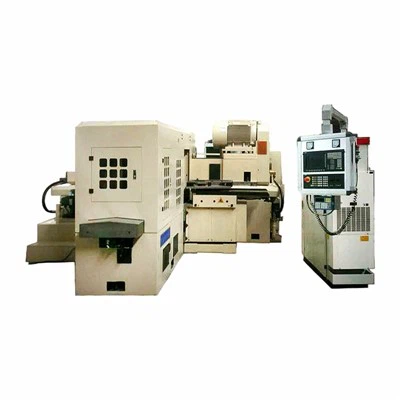
Let’s start with the basics. Connecting rods are like the middlemen in an engine. They connect the piston to the crankshaft, transferring the force from the piston’s up – and – down motion into the rotational motion of the crankshaft. But diesel and gasoline engines have different operating conditions, and that means the connecting rods for these two types of engines need to be machined differently.
Material Selection
One of the first big differences is in the materials we use. Gasoline engines generally operate at lower compression ratios compared to diesel engines. Gasoline engines usually have compression ratios in the range of 8:1 to 12:1, while diesel engines can have compression ratios from 14:1 up to as high as 25:1.
For gasoline engines, we often use lightweight materials like forged aluminum alloys. Aluminum is great because it’s light, which helps to reduce the overall weight of the engine. This can lead to better fuel efficiency and quicker acceleration. The machining of aluminum connecting rods is also a bit easier in some ways. It cuts more smoothly, and we can achieve tight tolerances with relative ease. We can use high – speed machining processes, which are great for mass – producing connecting rods for gasoline engines.
On the other hand, diesel engines need connecting rods that can handle much higher forces. That’s why we typically opt for forged steel for diesel engine connecting rods. Steel has excellent strength and toughness, which are essential properties when dealing with the high – pressure combustion in diesel engines. However, machining steel is a lot more challenging than machining aluminum. The cutting tools wear out faster, and we need to use lower cutting speeds. We also have to be more careful with coolant usage to prevent overheating during the machining process.
Machining Precision
The precision required in machining is another area where diesel and gasoline engine connecting rods differ. Gasoline engines need their connecting rods to be machined with high precision to ensure smooth operation and minimal vibration. Since gasoline engines typically run at higher RPMs (revolutions per minute), even a small imbalance in the connecting rod can cause significant problems.
We need to pay close attention to the dimensional accuracy of the big end (where it connects to the crankshaft) and the small end (where it connects to the piston). The surface finish of these areas also matters a lot. We often use multi – step machining processes, such as rough machining followed by finish machining, to achieve the required precision. For example, we might use a combination of milling, turning, and grinding operations to get the right dimensions and surface finish on gasoline engine connecting rods.
In diesel engines, while precision is still crucial, the focus is a bit different. Diesel engines run at lower RPMs but produce more torque. The connecting rods need to be able to withstand the high – torque forces without deforming. So, we focus more on the structural integrity and the overall strength of the connecting rod. The dimensional tolerances for diesel engine connecting rods are still tight, but we have a bit more leeway in terms of the surface finish. We can use some cost – effective machining methods that might not be suitable for gasoline engines.
Heat Treatment
Heat treatment is an important step in the machining process, and it also varies between diesel and gasoline engine connecting rods. For gasoline engine connecting rods made of aluminum, heat treatment is used mainly to enhance the material’s strength and hardness. We typically use a solution heat treatment followed by precipitation hardening. This process helps to improve the mechanical properties of the aluminum, making it more durable and resistant to wear.
In the case of diesel engine connecting rods made of steel, heat treatment is even more critical. We use processes like quenching and tempering to achieve the right balance of strength and toughness. Quenching rapidly cools the steel to increase its hardness, but this also makes it brittle. Tempering is then done to relieve the internal stresses and reduce the brittleness, resulting in a connecting rod that can handle the high forces in a diesel engine. The heat treatment process for diesel engine connecting rods is more complex and time – consuming, and it requires careful control of temperature and cooling rates.
Design Considerations
The design of the connecting rods for diesel and gasoline engines also has some differences. Gasoline engine connecting rods are often designed to be as lightweight as possible while still maintaining the necessary strength. This might involve using thinner cross – sections and more complex geometries. For example, we might use I – beam or H – beam cross – sections to reduce weight without sacrificing too much strength.
Diesel engine connecting rods, on the other hand, are designed for maximum strength. They usually have thicker cross – sections and simpler geometries. The focus is on providing a solid structure that can withstand the high – pressure forces generated during combustion. The big end and small end of the connecting rod in a diesel engine are also designed to be more robust, with larger bearing surfaces to handle the higher loads.
Cost Factors
Cost is always a consideration in any manufacturing process. The machining of gasoline engine connecting rods is generally more cost – effective in terms of material and machining time. As I mentioned earlier, aluminum is cheaper than steel, and the machining processes for aluminum are faster. We can use high – speed machining techniques, which reduce the overall production time and cost.
For diesel engine connecting rods, the cost is higher. The steel material is more expensive, and the machining processes are more time – consuming. The heat treatment process for steel is also more complex and energy – intensive, which adds to the cost. However, the performance requirements of diesel engines justify these higher costs.
Quality Control
Quality control is a must in our business. For gasoline engine connecting rods, we use a variety of inspection methods to ensure the high precision we need. We use coordinate measuring machines (CMMs) to check the dimensional accuracy of the connecting rods. We also use non – destructive testing methods like ultrasonic testing to detect any internal defects in the aluminum.
In the case of diesel engine connecting rods, quality control is equally important. We perform more in – depth testing on the steel connecting rods. In addition to CMMs and ultrasonic testing, we also use magnetic particle inspection to detect surface and near – surface defects. We also test the mechanical properties of the steel, such as hardness and tensile strength, to make sure the connecting rods can handle the high forces in a diesel engine.
So, as you can see, there are quite a few differences in machining connecting rods for diesel and gasoline engines. Whether you’re in the business of manufacturing gasoline engines or diesel engines, getting the right connecting rods is crucial for the performance and reliability of your engines.
Double Disc Grinding Machines If you’re in the market for high – quality connecting rods, whether for diesel or gasoline engines, I’d love to have a chat with you. We’ve got the expertise and the equipment to produce top – notch connecting rods that meet your specific requirements. Reach out to us for a consultation and let’s discuss how we can help you get the best connecting rods for your engines. We’re here to provide you with cost – effective solutions without compromising on quality.
References
- Automotive Engine Design: Principles and Practice, by Jack Erjavec.
- Manufacturing Engineering and Technology, by Serope Kalpakjian and Steven Schmid.
Rushan Shuangxing Machine Tool Manufacturing Co., Ltd.
Rushan Shuangxing Machine Tool Manufacturing Co., Ltd. is one of the most reliable connecting rod machining manufacturers and suppliers in China, featured by quality products and low price. Please rest assured to wholesale durable connecting rod machining for sale here from our factory. Customized orders are welcome.
Address: No. 28, Chuangye 1st Road, Rushan, Weihai, Shandong Province, China.
E-mail: wxm@rssxjc.net
WebSite: https://www.ddgmachine.com/
