Hey there! I’m an alumina supplier, and I often get asked this super common question: "Is alumina a metal or a non-metal?" It’s a bit of a head – scratcher, isn’t it? Let’s dig into this topic and clear up the confusion once and for all. Alumina
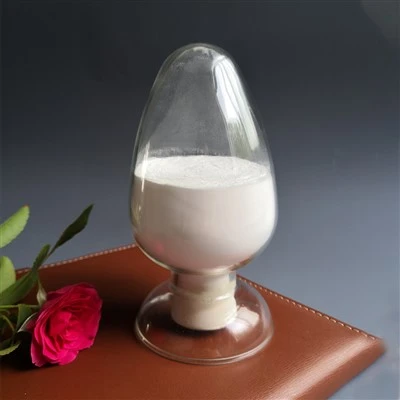
First off, let’s talk about what alumina actually is. Alumina, also known as aluminum oxide (Al₂O₃), is a chemical compound. It forms when aluminum reacts with oxygen in the air. You can find it in nature as corundum, which is a hard mineral. Rubies and sapphires are just fancy versions of corundum with some trace elements that give them those beautiful colors.
Now, let’s break down the characteristics of metals and non – metals. Metals are known for being good conductors of heat and electricity. They’re usually shiny, malleable (you can hammer them into thin sheets), and ductile (you can stretch them into wires). Think of copper wires in your electronics or the shiny silverware you use at home.
Non – metals, on the other hand, are generally poor conductors of heat and electricity. They’re often brittle, and they don’t have that metallic luster. Things like sulfur or carbon in the form of graphite (except graphite is a bit of an oddball as it can conduct electricity) fall into this category.
So, where does alumina fit in? Well, alumina is a non – metal. It’s an oxide, and oxides are typically non – metallic compounds. It doesn’t have the shiny appearance of a metal, and it’s definitely not malleable or ductile. In fact, it’s quite hard and brittle. You wouldn’t be able to hammer alumina into a thin sheet like you could with a metal like gold.
One of the key reasons alumina is a non – metal is its chemical bonding. In alumina, the aluminum atoms are bonded to oxygen atoms through ionic bonds. The aluminum atoms lose electrons to the oxygen atoms, forming positive aluminum ions (Al³⁺) and negative oxygen ions (O²⁻). This ionic bonding is characteristic of many non – metallic compounds.
Let’s look at its electrical and thermal conductivity. Alumina is an insulator. It doesn’t conduct electricity well at all under normal conditions. This is a big contrast to metals, which have a sea of free electrons that can move around and carry an electric current. And when it comes to heat, alumina isn’t a great conductor either. That’s why it’s often used in applications where you need to insulate against heat, like in some high – temperature furnaces.
But here’s the interesting part. Even though alumina is a non – metal, it’s closely related to aluminum, which is a metal. Aluminum is extracted from alumina through a complex process called the Hall – Héroult process. In this process, alumina is dissolved in molten cryolite and then an electric current is passed through it. The electric current causes the aluminum ions in the alumina to gain electrons and turn into aluminum metal.
So, if you’re wondering about the importance of alumina in industry, it’s huge! Because it’s hard, has high melting point, and is a good insulator, it’s used in a ton of applications. For example, it’s used to make abrasives. Sandpapers and grinding wheels often have alumina grains on them because they can grind down other materials very effectively. It’s also used in the production of ceramics. Alumina ceramics are strong, wear – resistant, and can withstand high temperatures. You’ll find them in things like spark plug insulators, cutting tools, and even some dental implants.
In the electronics industry, alumina is a star player too. Its insulating properties make it ideal for use in printed circuit boards. It helps to separate electrical components and prevent short – circuits. And in the aerospace industry, alumina is used in the production of heat shields and other high – performance parts.
As an alumina supplier, I’ve seen firsthand how versatile this non – metal is. Whether it’s for a small – scale manufacturing project or a large – scale industrial application, alumina is always in demand. We offer high – quality alumina products that meet the strictest industry standards.
If you’re in the market for alumina, you’ll want to consider a few things. First, the purity of the alumina matters. Higher purity alumina is often required for more sensitive applications like electronics. We can provide alumina with different levels of purity to suit your specific needs. Second, particle size is important. Depending on your application, you might need fine – grained or coarse – grained alumina. We have a range of particle sizes available to ensure you get the right product for your project.
Another thing to think about is the form of the alumina. We can supply it in powder form, which is great for making ceramics or other composites. We also have it in the form of sintered products like tubes and rods, which are ready to be used in various industrial processes.
I know there are a lot of alumina suppliers out there, but what sets us apart is our commitment to quality and customer service. We’ve been in the business for a long time, and we know the ins and outs of the alumina market. We work closely with our customers to understand their needs and provide them with the best possible solutions.
So, if you’re interested in purchasing alumina for your business, whether it’s for a small – scale experiment or a large – scale production line, don’t hesitate to reach out. We’re here to answer any questions you might have and to help you make the right choice for your needs.
I hope this blog has cleared up the question of whether alumina is a metal or a non – metal. It’s definitely a non – metal, but its relationship with the metal aluminum and its wide range of industrial applications make it a really interesting compound.

References:
- "Chemistry: The Central Science" by Brown, Lemay, and Bursten
- "Industrial Minerals and Rocks" published by the Society for Mining, Metallurgy & Exploration
Crucible That’s all for now. Let’s get in touch and start chatting about your alumina requirements!
Luoyang Zhongchao New Material Co., Ltd.
As one of the most professional alumina manufacturers and suppliers in China, we have world-leading production equipment and strong manufacturing capabilities. Please rest assured to buy high quality alumina made in China here from our factory. For price consultation, contact us.
Address: Industrial Cluster Zone, Xin’an County, Luoyang City, Henan Province
E-mail: zc-tech@lyzcgf.com
WebSite: https://www.zc-aths.com/
