Hey there, if you’re the kind of person who’s ever stood in a lab, staring at a machine running a test for hours, only to realize it’s still spitting out data on a clunky old screen that’s 5 years out of date—you get me. I’ve been in the physical and chemical properties testing equipment game for almost a decade, and I’ll tell you straight up: this space is changing so fast, it’s hard to keep up. Most equipment suppliers don’t talk about the real, day-to-day stuff that matters to you, so let’s cut the corporate crap and break down what’s actually coming next for the gear we all rely on. Physical and Chemical Properties Testing Equipment

First off, let’s be real—every lab I’ve worked with lately is drowning in data overload. You run a melting point test, you get 10 different numbers from the same sample, and you’re stuck cross-referencing them all in a spreadsheet that takes forever to sort. The big trend here that’s already starting to blow up? Smart, connected equipment that doesn’t just spit out numbers—it actually makes sense of them. Wait, no, not the basic “send data to a cloud” stuff you’ve seen already. I’m talking about machine learning (ML) built right into the test itself. Like, a rheometer for polymer testing that notices your sample is behaving weird mid-test, adjusts the temperature automatically instead of making you stop and redo the run, and flags if the result is off because of a tiny sample flaw no human would catch. Last month, a food testing lab I consult for swapped their old moisture analyzers for ones with this feature—they cut their repeat tests by 32% in 2 weeks. That’s the kind of win that actually moves the needle, not just “now you can see your data on your phone.” People keep saying “Industry 4.0” like it’s a buzzword, but for us, it’s about less time clicking through menus and more time doing actual testing.
Next, let’s talk about portability. For years, the mindset was “big labs need big, expensive equipment, small labs get leftover junk.” But now? More and more customers—from environmental field teams to pharmaceutical field inspectors to even craft chocolate makers testing bean batches on site—are begging for gear that doesn’t weigh 500 lbs and need a dedicated electrical line. I saw a tiny, portable pH and conductivity tester at a trade show last quarter that fits in your pocket, runs on a single AAA battery, and is accurate enough for EPA compliance testing. No more packing a truck full of equipment for a site visit. And it’s not just for field use—small, R&D labs don’t have space for a 3 foot long tensile tester. We’re already working on a benchtop tensile tester that’s half the size of the current models, no loss in accuracy, and costs 40% less. The old guard will tell you portable equipment sacrifices quality, but that’s outdated. MEMS (micro-electro-mechanical systems) tech has gotten so good that the sensors are now just as precise as the ones in bulkier machines, and we’re scaling that down fast.
Then there’s sustainability. This one’s huge, and it’s not just because companies are jumping on the ESG bandwagon (though that’s part of it). Think about it: every time you run a test, you’re wasting energy heating a furnace for an hour, wasting chemicals cleaning sample holders, wasting plastic on disposable sample containers. What if your equipment could cut all that waste? We’re already testing ovens for ash content that run on low-power induction instead of conventional heating—they use 60% less electricity and cool down twice as fast, so you can run a test and clean it in half the time. And for labs that use a lot of hazardous chemicals for wet chemistry tests, there’s new equipment that uses closed-loop systems to recapture and reuse solvents, so you don’t have to dump toxic waste every week. I had a client in the cosmetics industry tell me they were spending $12k a year on solvent disposal alone—switching to our new closed-loop distillation equipment cut that cost to $1.5k. That’s not just eco-friendly; it’s a massive money saver. The biggest pushback we get from older labs is “this is more complicated than the old way,” but once they see the numbers, they’re on board. No one wants to waste money or harm the planet if they don’t have to.
Wait, let’s not forget about accessibility. For too long, high-quality testing equipment was priced out of smaller labs, academic teams, and even startups. A full X-ray fluorescence (XRF) analyzer used to cost upwards of $50k, which is impossible for a 2-person startup testing new battery materials. Now, benchtop XRF units are coming in at under $10k, and portable ones for field work are under $2k. The tech is still top-tier—they just stripped out the fancy extra features that big labs pay for, focusing on the core tests startups actually need. I’ve talked to a team of grad students at a state university who used to have to share a single melting point machine between 10 research groups, and now they’ve got three new ones that are half the price of the old model. That’s a game-changer for innovation—more people can do testing without breaking the bank.
Of course, there are growing pains. A lot of labs are worried about cybersecurity as equipment gets connected—if a ML-powered tester is sending data to the cloud, what if someone hacks it? We’re building end-to-end encryption into all our new gear, and working with labs to make sure their networks are set up safely, but it’s still a hurdle. Also, there’s a learning curve for new tech. The portable ML testers aren’t as intuitive as a dial-and-screen machine you’ve used for 10 years. But we’re rolling out way better training—our guys don’t just sell you a machine and dip. We do on-site training, 24/7 remote support, and even have a free online course for basic troubleshooting. It’s not perfect, but it’s way better than the “here’s the manual, good luck” approach most suppliers take.
Now, let’s tie this back to what you actually care about. If you’re a lab manager, a quality control lead, or even a startup founder testing new materials, these trends aren’t just fancy ideas. They mean less wasted time, lower costs, less hassle with compliance, and more flexibility to test more samples, faster. No more waiting 3 days for a test that could be done in an hour, no more blowing your budget on a machine you barely use, no more dealing with toxic waste you don’t have to.
If you’re tired of equipment that feels like it’s stuck in the last decade, and you want to check out what’s actually coming next—whether it’s a new portable tester for your field team, a smarter rheometer for your polymer lab, or that closed-loop solvent system to cut your waste costs—hit us up. We work with labs of all sizes, from small startups to global manufacturing plants, and we don’t do one-size-fits-all solutions. We’ll listen to your specific pain points, show you what gear fits, and make sure you’re not left holding a machine that’s obsolete in two years.
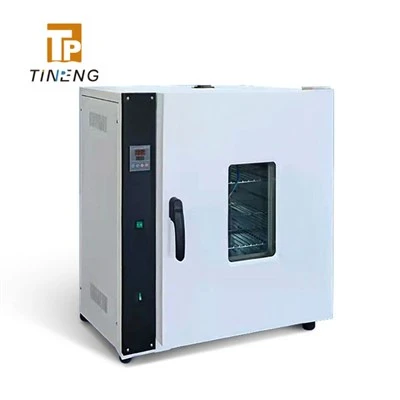
Let’s be real, testing equipment isn’t just metal and wires. It’s the stuff that makes sure your products are safe, your materials meet standards, your research is accurate. It’s worth investing in gear that actually works for you, not against you. Let’s connect and talk through what you need—no sales pitch, no pressure, just real talk about testing gear that’s built for the future.
Concrete Compression Testing Machine References
- International Organization for Standardization. (2023). Industry 4.0 in Testing and Calibration Laboratories: Guidelines for Implementation. ISO 18000-5:2023.
- U.S. Environmental Protection Agency. (2024). Sustainable Laboratory Practices: Reducing Energy and Chemical Waste in Physical Testing. EPA Report 24-03.
- Market Research Future. (2023). Global Physical and Chemical Properties Testing Equipment Market: Trend Analysis and Forecast 2023-2030. MRFR-PCTE-1123.
- American Society for Testing and Materials. (2024). Portable Testing Technologies for Field and On-Site Compliance. ASTM Manual MNL 157.
Zhuozhou Tianpeng Imp. and Exp. Trade Co., Ltd.
Zhuozhou Tianpeng Imp. and Exp. Trade Co., Ltd. is one of the most professional physical and chemical properties testing equipment manufacturers and suppliers in China, featured by quality products and good price. Please rest assured to buy advanced physical and chemical properties testing equipment made in China here from our factory. Customized orders are welcome.
Address: Building C28, Hegu Technology Industrial Park, Development Zone, Zhuozhou, Hebei, China
E-mail: zhangdajing@testmould.com
WebSite: https://www.testmould.net/
