If you’ve ever spent a winter in a place where the wind bites and the mercury drops well below freezing, you know that cold doesn’t just make your nose run—it makes pretty much everything work differently. For anyone relying on UL752-rated bulletproof glass, that’s a big deal. I’ve been supplying UL752 glass for over 8 years now, and one of the most common questions I get from clients up in places like Minnesota, Canada, and even parts of Alaska isn’t just “does it stop bullets?” It’s “what happens to this stuff when it’s 20 below zero?” Bulletproof Glass for UL752 Standard

Let me start by breaking down what UL752 even is, because a lot of people hear “bulletproof glass” and think it’s just one thick piece of clear plastic or glass. Nope. UL752 is a Underwriters Laboratories standard that specifically tests ballistic-resistance materials for use in places like bank teller windows, convenience store counters, and government office partitions. The ratings go from Level 1 (stops 9mm handguns) all the way up to Level 10 (stops armor-piercing rifle rounds), and each test is rigorous—shooting specific rounds, at specific distances, and checking that the glass doesn’t penetrate more than 40 mm into a backstop material. Simple enough, right? But where cold climates mess things up is that bulletproof glass isn’t a single material. It’s a laminate: multiple layers of ultra-hard glass (usually soda-lime or borosilicate) bonded together with a tough, flexible interlayer—most often polycarbonate (PC) or polyvinyl butyral (PVB). That interlayer is the unsung hero here, and it’s the part that freaks out when it gets cold.
Here’s the thing about polymers like PVB and PC: they’re flexible at room temperature, which is why when a bullet hits UL752 glass, that soft interlayer slows the round down, spreads its energy across multiple layers of glass, and keeps everything from shattering into a million sharp pieces. But drop the temperature enough, and that flexible plastic interlayer gets brittle. Like, potato chip brittle. Not the kind of flexible stuff that can absorb impact—more like the kind that cracks if you bend it too hard. I’ve heard horror stories from installers in northern Maine, where they did a test installation last winter, forgot to let the glass acclimate overnight, and when they set it in place, it developed tiny, invisible cracks in the interlayer before they even sealed the frame. Those cracks don’t show up on a visual check, but put a bullet through it later, and that brittle interlayer can’t do its job. The glass layers might separate, or the bullet could punch straight through where the interlayer failed.
But wait—all UL752 glass isn’t made the same. Some manufacturers adjust their interlayer formulations to handle cold temps, right? Yeah, that’s the secret most big suppliers like us know. Standard PVB interlayer is rated for use down to about -10°C (14°F). If you need it for climates colder than that, you have to spec cold-formed PVB, which is modified with additives that keep it flexible down to -40°C (-40°F)—a temperature that’s basically universal for cold climate zones. PC interlayers are a little trickier; regular PC gets brittle around -20°C (-4°F), but if we use a specialized grade of PC called impact-modified polycarbonate, that drops to -50°C (-58°F). The cost difference is noticeable, but when you’re dealing with clients who need this for things like rural gas stations or remote government checkpoints where temps don’t climb above freezing for 6 months straight, it’s non-negotiable.
Now, let’s get real about testing. UL752 doesn’t actually have a specific cold temperature test, which is a huge gap in the standard. I’ll be honest—that’s why so many installers and end-users get burned. The UL752 test is always done at room temperature, around 23°C (73°F), with no deviation for climate. So a UL752 Level 3 rated glass that works great in Texas or Florida might not pass the same test when it’s been sitting outside in January in North Dakota. That’s why we built our own in-house cold test chamber, for our UL752 glass lines. We chill samples down to -40°C, leave them there for 24 hours to make sure every layer is at the right temp, then shoot them with the exact rounds specified in their rating. The results? We’ve found that standard cold PVB interlayer glass loses about 15% of its ballistic performance when tested at -20°C, and 30% at -40°C. But when we spec the modified interlayers, that number drops to under 5%—almost no performance loss.
Another thing people don’t think about: thermal expansion. Glass and the interlayer expand and contract at different rates when temps swing. In cold weather, the glass shrinks faster than the polymer interlayer, which creates tiny gaps at the edges of the laminate. If those gaps get bad enough, moisture can get in—even from condensation when you bring warm glass into a cold space, or from snow melting into the frame. And moisture is the enemy here; it freezes, expands, and can split the interlayer from the glass. I had a client in Alberta a few years ago who installed standard UL752 glass in a convenience store, and by March, the edges were foggy. When we pulled it out, the interlayer was delaminated—moisture had gotten in, frozen, and destroyed the bond. That’s why proper installation is just as important as the glass itself in cold climates. You can’t use regular caulking around the edges; you need a flexible, cold-rated sealant that moves with the glass and interlayer as they expand and contract. We always send our installers a cold climate installation guide with every bulk order, and we do on-site checks for clients who are in zones where temps drop below -15°C.
Wait, but what about real-world performance? I don’t want this to be all lab talk. Let’s give you a real example. Last year, we supplied UL752 Level 4 glass to a remote Border Patrol station in northern Minnesota. That’s a Level that stops .44 Magnum rounds, right? The station is in a spot where winter temps regularly hit -35°C (-31°F). We spec’d the modified cold-formed PVB interlayer, and worked with their construction crew to use cold-rated sealant. A few months ago, there was an incident—someone tried to shoot out the station window. The .44 round hit, and the glass didn’t penetrate. The only damage was a small spiderweb crack in the outer glass layer, and the interlayer held everything together. The Border Patrol officer on site said that if they’d used standard UL752 glass, that round would have gone straight through, no question. That’s the stuff that makes this job worth it.
I also get questions from people who say “why not just use thicker glass?” Thicker UL752 glass for cold climates would be even more brittle, right? Yeah, that’s a bad move. More layers of glass mean more interlayer, but if the interlayer is brittle, more layers just mean more places for it to crack. Thinner glass with properly formulated interlayers is always better for cold weather. Plus, thicker glass is heavier, which means more stress on the frame and installation—more risk of the whole window shifting, which can also damage the laminate.
One thing I should mention: maintenance. Even the best UL752 cold-rated glass will hold up better if you take care of it. In the winter, salt and de-icing chemicals from roads can get splashed on exterior glass. Those chemicals are corrosive, and they can eat away at the edges of the laminate over time, especially when temps are cold and the glass is stiff. We recommend washing the exterior of the glass with a mild, non-corrosive cleaner every 2 weeks in cold months, and checking the edges for fog or gaps once a month. If you spot a tiny gap, seal it immediately before moisture gets in.
Let’s circle back to that UL752 standard gap, because it’s a big one. Right now, UL doesn’t have any requirements for cold temperature testing in their UL752 ratings. That means a manufacturer can ship the same glass to Miami and Minneapolis, and it’ll still have the UL752 label—even if it fails ballistic testing in Minnesota. That’s why it’s so important to work with a supplier who knows the cold climate tricks, not just a generic UL752 seller. We don’t just slap the UL label on every piece; we test every cold-weather rated batch in our own chamber to make sure it meets the actual performance you need, not just the room temp UL test.
I know this stuff can seem overwhelming if you’re not in the bulletproof glass business. You just need a window that’ll stop a round, keep your building safe, and not fall apart when it’s freezing outside. That’s why we built our whole business around cold climate UL752 glass. We’ve spent years testing different interlayers, working with installers up north, fixing the mistakes that early clients made when they tried to use standard glass in places that don’t have mild winters.
If you’re someone who needs UL752 glass for a place that sees temps below -10°C, don’t just order the cheapest UL752 you can find. Ask the supplier what interlayer they use, if they’ve tested it in cold temps, and what kind of installation support they provide. We’re here for that—we don’t just drop off a pallet of glass and disappear. We answer late-night calls from installers in blizzards, send out cold climate guides, and even do on-site checks if a job is big enough.
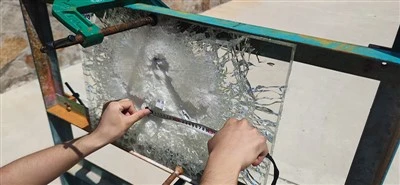
At the end of the day, bulletproof glass in cold climates isn’t magic—it’s about the right materials, proper testing, and good installation. The UL752 standard is a great baseline, but it doesn’t account for real world conditions. That’s where a good supplier makes all the difference. If you’ve got questions about what kind of UL752 glass works for your climate, or you need a quote for a project, reach out. We’re ready to help you get something that works, no matter how low the temperature drops.
Bulletproof Glass for NIJ Standard References
- Underwriters Laboratories. (2021). UL 752: Standard for Safety for Bullet-Resistant Equipment.
- American Society for Testing and Materials. (2018). ASTM E3033: Standard Test Method for Ballistic Resistance of Structural Materials at Low Temperatures.
- Dupont Performance Polymers. (2022). Cold-Resistant Polyvinyl Butyral (PVB) Interlayer Technical Data Sheet.
- National Institute of Justice. (2020). Ballistic Materials Performance in Extreme Cold Climates: Field Test Report.
Shaoxing Transparent Armoring Materials Co., Ltd.
As one of the most professional bulletproof glass for ul752 standard manufacturers and suppliers in China, we’re featured by quality products and good service. Please rest assured to buy durable bulletproof glass for ul752 standard made in China here from our factory. We also accept customized orders.
Address: No.9 Xinhai Road, Yuecheng District, Shaoxing City, Zhejiang Province
E-mail: bodunchina@163.com
WebSite: https://www.king-armor.com/
