What is the difference between Brown’s Gas and other gases?
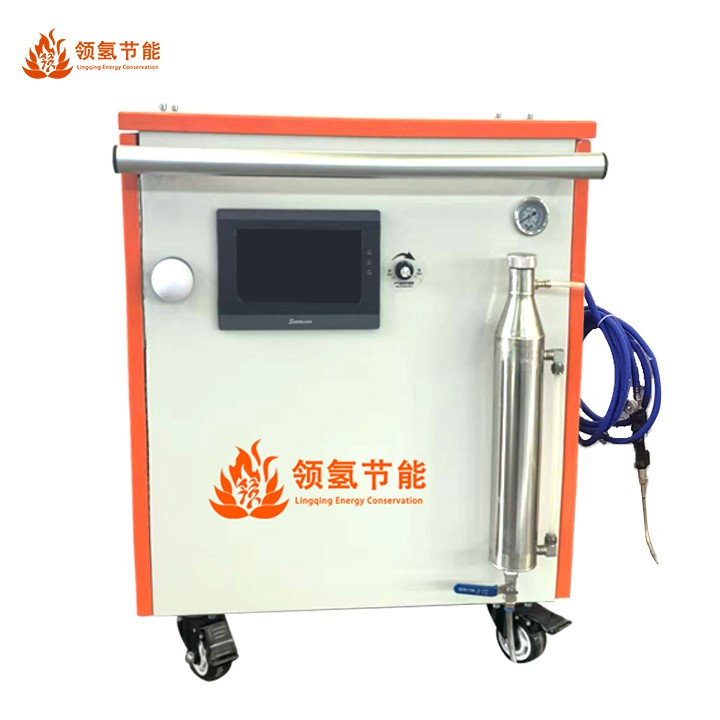
As a supplier of Brown’s Gas Generators, I’ve had numerous inquiries about the distinctiveness of Brown’s Gas compared to other gases. This blog aims to shed light on these differences, exploring the unique properties, applications, safety aspects, and environmental implications of Brown’s Gas in contrast to more commonly known gases. Brown’s Gas Generator
Composition and Properties
Brown’s Gas
Brown’s Gas, named after its inventor Yull Brown, is a unique gas mixture primarily composed of hydrogen and oxygen in a 2:1 ratio, the same ratio as in water (H₂O). What sets it apart is that these hydrogen and oxygen molecules are in an atomic state, rather than being combined into water molecules. This atomic configuration gives Brown’s Gas some remarkable properties. It has a very high energy density, which means it can release a large amount of energy when combusted. Additionally, it burns with an extremely high flame temperature, reaching up to 5,500°F (3,038°C) in some cases. This high temperature makes it suitable for a variety of high – energy applications.
Other Gases
Let’s take a look at some common gases for comparison. Natural gas, which is mainly composed of methane (CH₄), is a widely used fossil fuel. It burns with a relatively lower flame temperature compared to Brown’s Gas, typically around 3,500°F (1,927°C). The combustion of natural gas releases carbon dioxide and water vapor as by – products, contributing to greenhouse gas emissions.
Propane (C₃H₈) is another popular fuel gas. It has a higher energy density than natural gas but still lower than Brown’s Gas. Propane burns with a flame temperature of about 3,600°F (1,982°C). Similar to natural gas, its combustion also produces carbon dioxide and water, making it a contributor to global warming.
Hydrogen gas (H₂) is often considered a clean energy alternative. When burned, it only produces water vapor. However, pure hydrogen gas is highly flammable and explosive in certain concentrations in air. Brown’s Gas has a more stable combustion characteristic due to the presence of oxygen in the correct stoichiometric ratio, reducing the risk of explosion compared to pure hydrogen.
Applications
Brown’s Gas
The high flame temperature and energy density of Brown’s Gas make it ideal for a range of industrial applications. It can be used for precision welding and cutting of metals. Due to its ability to generate a very fine and concentrated flame, it can achieve high – quality welds with minimal heat – affected zones. This is particularly useful in the manufacturing of delicate components, such as in the electronics and aerospace industries.
In the field of glass fabrication, Brown’s Gas is used for glass blowing and fusing. The high – temperature flame can quickly melt glass, allowing for precise shaping and joining of glass pieces. It also finds applications in the production of high – quality ceramics, where the intense heat can help in achieving better sintering and densification of ceramic materials.
Other Gases
Natural gas is mainly used for heating, cooking, and electricity generation in residential and commercial buildings. It is also used as a feedstock in the chemical industry for the production of various chemicals, such as ammonia and methanol.
Propane is commonly used for heating in homes and businesses, especially in areas where natural gas is not available. It is also widely used in outdoor grills and camping stoves due to its portability and ease of use.
Hydrogen gas is being explored as a fuel for fuel cells in vehicles and stationary power generation. It has the potential to provide clean energy, but the challenges of storage and transportation have limited its widespread adoption so far.
Safety
Brown’s Gas
Brown’s Gas is generally considered safer than pure hydrogen gas. As mentioned earlier, the presence of oxygen in the correct ratio reduces the risk of explosion. The generators that produce Brown’s Gas are designed with multiple safety features, such as pressure regulators, back – check valves, and water seals. These features prevent the gas from flowing back into the generator and reduce the risk of flashback.
Other Gases
Natural gas is highly flammable and can be explosive if it accumulates in an enclosed space. It has a distinct odor added to it (mercaptan) so that leaks can be easily detected. Propane is also flammable and can cause fire or explosion if not handled properly. Special care must be taken when storing and transporting propane cylinders.
Hydrogen gas is extremely flammable and has a wide flammability range in air (4% – 75% by volume). This makes it very dangerous to handle, and strict safety protocols are required for its storage, transportation, and use.
Environmental Impact
Brown’s Gas
One of the most significant advantages of Brown’s Gas is its environmental friendliness. When combusted, it only produces water vapor, making it a clean energy source. There are no carbon emissions, sulfur oxides, or nitrogen oxides released during combustion. This makes it an attractive option for industries looking to reduce their carbon footprint and comply with environmental regulations.
Other Gases
As mentioned earlier, natural gas and propane are fossil fuels. Their combustion releases carbon dioxide, a major greenhouse gas that contributes to global warming. In addition, the extraction and production of these fossil fuels can have significant environmental impacts, such as habitat destruction and water pollution.
Hydrogen gas, if produced from renewable sources such as electrolysis using renewable electricity, can be a clean energy carrier. However, most of the hydrogen gas currently produced is from fossil fuels through a process called steam methane reforming, which also releases carbon dioxide.
Efficiency and Cost
Brown’s Gas
Brown’s Gas generators are designed to produce the gas on – demand, reducing the need for storage. This on – demand production also improves efficiency as there is no loss of gas during storage. In terms of cost, although the initial investment in a Brown’s Gas generator may be higher compared to traditional gas supply systems, the long – term cost savings can be significant. This is due to the high efficiency of the gas in various applications and the fact that it does not require expensive fuel storage facilities.
Other Gases
The cost of natural gas and propane is largely determined by market prices, which can be volatile. The transportation and storage costs of these gases also add to the overall cost. Hydrogen gas production, especially from renewable sources, is currently more expensive compared to fossil – based energy sources. The high cost of hydrogen storage and transportation is another factor that limits its competitiveness.

In conclusion, Brown’s Gas offers several unique advantages over other gases in terms of composition, properties, applications, safety, environmental impact, and cost – effectiveness. Its high – energy density, clean combustion, and low explosion risk make it a valuable alternative in various industries.
Hydrogen-oxygen Generator If you are interested in exploring the potential of Brown’s Gas for your business, I encourage you to reach out to me. We can have a detailed discussion about how our Brown’s Gas Generators can meet your specific requirements and help you achieve your goals.
References
- Uytdenhouwen, P.V. (2007). "Brown’s Gas: An Overview of Its Properties and Applications". Journal of Sustainable Energy.
- Yull Brown. (1979). "The Principles of Brown’s Gas Generation and Utilization". International Journal of Hydrogen Energy.
- US Department of Energy. (2019). "Hydrogen Safety Handbook".
Jiangsu Lingqing Energy-saving Technology Co., Ltd.
We are one of the most reliable brown’s gas generator manufacturers and suppliers in China. With abundant experience, we warmly welcome you to buy customized brown’s gas generator made in China here from our factory. If you have any enquiry about quotation, please feel free to email us.
Address: Building #7, No. 1 Linhe Road, located on the west side of Anlan Road and north of Linhe Road, Huaiyin District, Huaian City, Jiangsu Province.
E-mail: jslingqing@163.com
WebSite: https://www.lingqingtech.com/
