As a seasoned supplier in the aluminum die casting industry, I’ve witnessed firsthand the pivotal role that mold release agents play in the manufacturing process. In this blog post, I’ll delve into the significance of mold release agents, their functions, types, and how they contribute to the overall efficiency and quality of aluminum die casting. Aluminum Die Casting
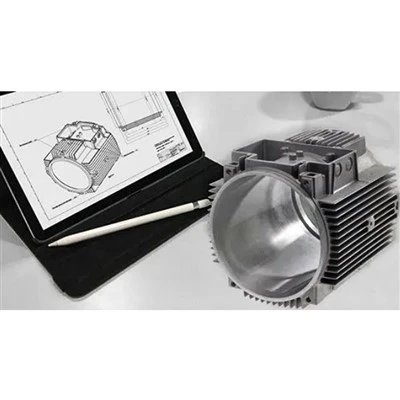
Understanding Aluminum Die Casting
Before we explore the role of mold release agents, let’s briefly understand the aluminum die casting process. Aluminum die casting is a manufacturing process in which molten aluminum is injected into a steel mold, or die, under high pressure. Once the aluminum solidifies, the die is opened, and the cast part is ejected. This process is widely used to produce high – quality, complex – shaped aluminum parts with excellent dimensional accuracy and surface finish for various industries, including automotive, aerospace, and electronics.
The Crucial Role of Mold Release Agents
Mold release agents are substances applied to the surfaces of the die cavities before each casting cycle. They act as a barrier between the molten aluminum and the die, facilitating the smooth ejection of the cast part and preventing it from sticking to the die surface.
1. Ejection Facilitation
One of the primary functions of a mold release agent is to make the ejection of the cast part from the die easier. During the die – casting process, the molten aluminum fills the die cavity and solidifies, conforming to the shape of the die. Without a proper release agent, the solidified aluminum can bond strongly to the die surface due to the high pressure and heat involved. This can lead to difficulties in ejecting the part, and in severe cases, it may cause damage to the part or the die itself. A well – applied release agent reduces the friction between the part and the die, allowing the part to be ejected smoothly without any distortion or damage.
2. Die Protection
Mold release agents also play a crucial role in protecting the die. The high – pressure injection of molten aluminum and the repeated heating and cooling cycles can cause significant wear and tear on the die surface. A release agent forms a protective layer on the die, reducing the direct contact between the molten aluminum and the die. This helps to minimize thermal shock, corrosion, and erosion of the die surface, thereby extending the lifespan of the die. By protecting the die, the release agent reduces maintenance costs and downtime associated with die repair and replacement.
3. Surface Quality Improvement
The quality of the surface finish of the cast part is directly influenced by the use of a mold release agent. A good release agent can help to achieve a smooth, defect – free surface on the cast part. It can prevent surface defects such as soldering, where the molten aluminum adheres to the die surface and leaves a rough or uneven finish on the part. Additionally, the release agent can enhance the part’s appearance by reducing the incidence of surface imperfections like porosity and sink marks. This is particularly important for parts that require a high – quality surface finish, such as those used in the automotive and consumer electronics industries.
Types of Mold Release Agents for Aluminum Die Casting
There are several types of mold release agents available for aluminum die casting, each with its own set of properties and advantages.
1. Water – Based Release Agents
Water – based release agents are the most commonly used type in aluminum die casting. They are environmentally friendly as they have a low volatile organic compound (VOC) content. These release agents are easy to apply, usually by spraying, and they provide good release performance. Water – based release agents work by forming a thin film on the die surface when the water evaporates. This film acts as a lubricant, allowing the cast part to be ejected smoothly. They also offer good heat resistance and can be used in high – temperature die – casting processes.
2. Solvent – Based Release Agents
Solvent – based release agents contain organic solvents as the carrier. They provide excellent release properties and are often used in applications where high – performance release is required. Solvent – based release agents can form a very thin and uniform film on the die surface, which is particularly beneficial for producing parts with complex shapes. However, they have a higher VOC content compared to water – based release agents, which can pose environmental and health risks. Therefore, proper ventilation and safety precautions are necessary when using solvent – based release agents.
3. Semi – Permanent Release Agents
Semi – permanent release agents are designed to provide long – lasting release performance. They are applied to the die surface in a thicker layer compared to other types of release agents and can withstand multiple casting cycles without the need for re – application. Semi – permanent release agents are often used in high – volume production environments where minimizing downtime for die recoating is critical. They typically consist of a combination of polymers and lubricants that form a tough, durable film on the die surface.
Factors Affecting the Performance of Mold Release Agents
The effectiveness of a mold release agent depends on several factors, and understanding these factors is crucial for achieving optimal results in aluminum die casting.
1. Die Temperature
The temperature of the die plays a significant role in the performance of the release agent. If the die temperature is too low, the release agent may not form a uniform film on the die surface, leading to poor release performance. On the other hand, if the die temperature is too high, the release agent may break down or burn off, which can also cause problems such as soldering and poor surface finish. Therefore, it is important to maintain the die temperature within the recommended range specified by the release agent manufacturer.
2. Application Method
The method of applying the mold release agent can also affect its performance. Spraying is the most common application method, as it allows for a uniform distribution of the release agent on the die surface. However, the spray pressure, nozzle type, and spraying pattern need to be carefully controlled to ensure proper coverage. Other application methods, such as brushing or dipping, may be used in certain situations, but they may not provide the same level of uniformity as spraying.
3. Aluminum Alloy Composition
The composition of the aluminum alloy being cast can influence the performance of the mold release agent. Different aluminum alloys have different melting points, fluidity, and chemical properties, which can affect the interaction between the alloy and the release agent. For example, some alloys may be more prone to soldering or may require a different type of release agent to achieve optimal release performance. Therefore, it is important to select a release agent that is compatible with the specific aluminum alloy being used.
Optimizing the Use of Mold Release Agents
To ensure the best results in aluminum die casting, it is essential to optimize the use of mold release agents. Here are some tips:
- Proper Selection: Choose a release agent that is specifically formulated for aluminum die casting and is suitable for your particular application. Consider factors such as die temperature, alloy composition, and production volume.
- Correct Application: Follow the manufacturer’s instructions for applying the release agent. Ensure that the die surface is clean and dry before application to achieve proper adhesion of the release agent.
- Regular Maintenance: Keep an eye on the performance of the release agent over time. If you notice any signs of poor release, such as part sticking or surface defects, adjust the application process or consider changing the release agent.
- Training: Provide proper training to your operators on the correct use and handling of mold release agents. This will help to ensure consistent and high – quality results.
Conclusion
In conclusion, mold release agents are an indispensable part of the aluminum die – casting process. They play a vital role in facilitating part ejection, protecting the die, and improving the surface quality of the cast parts. By understanding the different types of release agents, the factors affecting their performance, and how to optimize their use, you can significantly enhance the efficiency and quality of your aluminum die – casting operations.
Aluminum Die Casting If you’re in the market for high – quality aluminum die – cast parts and are interested in learning more about our products and services, we’d love to hear from you. Our team of experts is ready to assist you with your specific requirements and provide you with the best solutions for your business. Whether you need small – scale prototypes or large – volume production, we have the capabilities and expertise to deliver. Contact us to start a discussion about your next project and explore how we can work together to achieve your goals.
References
- Campbell, J. (2003). Casting. Butterworth – Heinemann.
- Flemings, M. C. (1974). Solidification Processing. McGraw – Hill.
- Kalpakjian, S., & Schmid, S. R. (2013). Manufacturing Engineering and Technology. Pearson.
Shenzhen Shunhaoda Technology Co., Ltd.
With abundant experience, we are one of the most professional aluminum die casting manufacturers and suppliers in China. If you’re going to buy bulk high quality aluminum die casting made in China, welcome to get free sample from our factory. Also, custom service is available.
Address: 902, Building A3, Tianrui Industrial Park, No. 35 Fuyuan 1st Road, Zhancheng Community, Fuhai Street, Bao’an District, Shenzhen
E-mail: sales@shdindustry.com
WebSite: https://www.shd-industry.com/
