Hey there, fellow tech enthusiasts! I’m a supplier of electronics cooling fans, and today I want to dig into a question that pops up a lot: Can an electronics cooling fan be used in a 3D printer? Electronics Cooling Fan
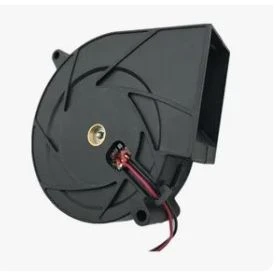
Let’s start with understanding what an electronics cooling fan does in general. These fans are mainly designed to keep electronic components from overheating. They suck in cool air and blow out the hot air, creating a kind of air – flow cycle. This helps regulate the temperature of things like power supplies, circuit boards, and other sensitive electronics.
Now, let’s talk about 3D printers. These amazing machines build three – dimensional objects layer by layer, and heat management is super crucial for them. There are two main areas in a 3D printer where cooling is important: the hot end and the print bed.
1. Cooling at the Hot End
The hot end is responsible for melting the filament so it can be extruded to form the 3D object. While it has to be hot enough to melt the plastic, it also needs proper cooling to make sure the filament doesn’t start to melt prematurely higher up in the extruder.
Can an electronics cooling fan work here? Well, it can to some extent. Electronics cooling fans are good at moving air, and that’s what we need. But the thing is, a 3D printer hot end usually needs a small, high – speed fan that can direct a focused stream of air right at the nozzle area.
Most of the electronics cooling fans I supply come in different sizes and airflow rates. For a 3D printer hot end, you’d want a fan that’s relatively small in size, say around 40mm or 50mm in diameter. The speed needs to be high to create a strong enough airflow to cool the molten filament as soon as it comes out of the nozzle.
One of the benefits of using an electronics cooling fan for the hot end is cost. In general, electronics cooling fans are more affordable compared to some specialized 3D printer cooling fans. If you’re on a budget or a hobbyist just starting out, this can be a great option.
However, there are some drawbacks. Electronics cooling fans might not have the exact specifications optimized for 3D printing. For example, the noise level could be an issue. Some of these fans can be a bit noisy, and if you’re running a 3D printer in a quiet environment like your home office, it can be annoying. Also, the way the air is directed might not be as precise as a fan made specifically for 3D printers. This could lead to uneven cooling around the nozzle, which might affect the quality of your prints.
2. Cooling the Print Bed
The print bed needs to be at a certain temperature for the filament to adhere properly at the start of the printing process. But sometimes, after the print is done, you might want to cool it down quickly to remove the print without warping.
Here, an electronics cooling fan can work quite well. You can place the fan near the print bed to blow air over it, speeding up the cooling process. The size doesn’t have to be as small as for the hot end. You can choose a larger fan, like a 60mm or 80mm one, which can cover a larger area of the print bed.
The nice thing about using an electronics cooling fan for the print bed is that it gives you more flexibility. You can easily adjust the position and angle of the fan to get the best cooling effect. And since the print bed doesn’t require super – precise cooling like the hot end, the general airflow from an electronics cooling fan is often sufficient.
But again, there are things to watch out for. If the fan is too powerful, it could cool the print bed too fast, causing the print to warp. And you need to make sure the air is evenly distributed over the bed. If the air is blowing more on one side than the other, it can lead to uneven cooling and poor print quality.
Compatibility with 3D Printer Control Systems
Another important aspect is how the electronics cooling fan will work with the 3D printer’s control system. Most 3D printers have a control board that can regulate the speed of the fans.
When you use an electronics cooling fan, you need to check if its voltage and power requirements match what the 3D printer’s control board can provide. Some 3D printers use 12V fans, while others might use 24V. If you pick a fan with the wrong voltage, it might not work properly, or it could even damage the control board.
In terms of speed control, many electronics cooling fans are DC – based. The 3D printer’s control board usually has the ability to adjust the speed of DC fans. But you need to make sure the control signals are compatible. Some advanced fans can also support PWM (Pulse Width Modulation) for more precise speed control, which can be really useful in getting the best cooling performance for your 3D printer.
Long – term Durability
When using an electronics cooling fan in a 3D printer, durability is a big deal. 3D printers can run for long periods of time, and the fan needs to be able to keep up.
Most of the electronics cooling fans I supply are built to last. They have high – quality bearings that can handle continuous operation. But the environment inside a 3D printer can be a bit harsh. There’s a lot of plastic dust and heat, which can affect the fan’s performance over time.
To make the fan last longer, you can do some simple maintenance. For example, you can clean the fan blades regularly to remove any dust buildup. And make sure the fan is installed in a way that it gets enough fresh air intake. If it’s blocked or in a confined space, it will overheat and wear out faster.
Conclusion
So, can an electronics cooling fan be used in a 3D printer? The answer is yes, but with some considerations. It can be a cost – effective and flexible solution, especially for hobbyist 3D printers. For the hot end, it can work if you choose the right size and speed, but you might face some issues with noise and precision. For the print bed, it’s a pretty good option as long as you control the airflow properly.

If you’re thinking about using an electronics cooling fan for your 3D printer, I’d be more than happy to help you find the right one. I’ve got a wide range of fans with different sizes, airflow rates, and voltage requirements. Whether you’re a beginner or an experienced 3D printing enthusiast, I’m here to assist you in getting the best cooling solution for your machine.
Special Function Fan If you’re interested in discussing which fan would be best for your 3D printer or want to place an order, don’t hesitate to reach out. We can have a chat about your specific needs and figure out the perfect fit.
References
- "3D Printing: The Next Industrial Revolution" by Douglas Woods
- "Electronics Cooling Handbook" by Amitabh Das
Dongguan Shengzhirong Electronics Co., Ltd.
As one of the most professional electronics cooling fan manufacturers and suppliers in China, our products have good reputation in the market. Please rest assured to wholesale high quality electronics cooling fan made in China here from our factory. Customized orders are welcome.
Address: 6/F, Building 2, No.68, Shunxing 2nd Road, Dajingtou 2nd Industrial Zone, Dalang Town, Dongguan City, Guangdong, China
E-mail: szr_coolingfan@163.com
WebSite: https://www.szrfan.com/
